|
Almost all industrialized
countries and many developing countries subsidize investment in renewable
energy. Also, the purchase of renewable energy grid carriers and network
facilities are subsidized. Mandatory subsidizing for all consumers of
electricity exists in the forms of: 1) preferential tariffs, 2) limits for
bioenergy participation in total generated electricity, 3) quotas related
to the distribution of biofuels in transportation fuels. Both: direct
funding, as well as the legal obligations imposed on participants in the
energy market are to compensate the economic differences between
bioenergetics and the total energy in the country.
Main fields of investment are
wind energy (42%), photovoltaic cells (32%) and biofuels (13%). These are
the most capital-intensive forms of renewable energy, which without
government subsides would have little chance of confrontation with the
classical energy. Investments in energy derived from biomass, geothermal
energy, solar generators and small hydropower plants have a share of about
6% of the total investment effort. These sectors of renewable energy are
particularly beneficial to local communities at relatively low cost.
Widely criticized in 2008 big hydro projects also received considerable
funding at US$45bln.
In addition to great efforts to
improve the capacity of renewable energy, we observe a very intensive
development of production infrastructure and research facilities. It is
estimated that in 2008 investments in new technology exceeded US$15bln.
Companies and funds investment in research and development increased up to
US$13.5bln. Also, banks keep lending at a high level for renewable energy
projects. The largest creditor is the European Investment Bank, whose
involvement increased in 2008 to US$2.6bln. Technology transfer and direct
investment to developing countries exceeded the sum of US$bln in 2008. The
World Bank earmarked US$1.2bln for the development of clean energy in
Third World countries.
Despite the financial crisis in
2008/2009, further development continues.. The crisis affected some of the
investments in renewable energy, however this sector receives major
financial support from governments. Renewable energy and clean
technologies have become an important element in stimulating activity of
many industries threatened with collapse. By such economical stimulation
authorities hope for creation of much needed "green jobs." USA launched a
10 years support program valued at US$150bln, Japan established a five
years long development plan worth US$12.2bln, South Korea will invest
US$36bln within next 4 years. In addition, many countries have established
special tax incentives for investors financing renewable energy
development programs. In the USA these credits were US$1.6bln in 2008, and
in China US$15bln. In Mexico, a new energy law will be funded at the level
of US$0.8bln, and Morocco claims its program valued at US$1bln.
The renewable energy industry
experienced an unprecedented boom in 2008. In September, the stock market
listed more than 160 companies producing this type of energy with the
total capital in excess of US$100bln. Global capital commitment for the
industry was estimated at US$240bln, and the level of employment at more
than 2.4 million people. The crisis at the end of 2008 caused
significant difficulties for many of newly launched enterprises, but
giants, for example like BP and Shell, have closed some plants and laid of
workers as well. Changes in the location of newly constructed facilities
became to be noticeable. China became a significant and growing producer
of solar and wind generated energy. Production of this type of energy has
been launched in India and Southeast Asia.
|
Wind
Energy
Wind energy utilization
represents the largest progress. The graphs below relate to its state at
the end of 2008.
growing output of energy obtained in wind
power plants
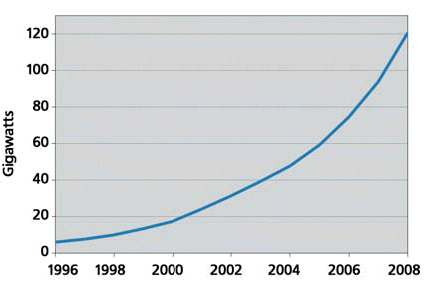
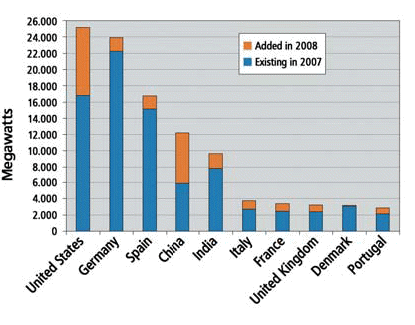
The largest increase is observed in the USA, about 8.4 GW. In China,
installed capacity had doubled by the year 2008. There are also African
and Asian countries investing in wind energy. The increase is also
observed in plants built on the seas. At the end of 2008 the installed
capacity reached 1.5 GW, mainly in Europe, where Britain is the leader.
Denmark obtains more than 30% of the energy from wind power installations.
10 countries with the highest share of wind
energy
The success of wind energy stems from both: its economic
attractiveness, as well as the decline in the industries that can be
easily switched to the production of windmills. 10 firms covering more
than 85% of demand for wind turbines are listed from the largest:
Vestas (Denmark), GE Wind (USA), Gamesa (Spain), Enercon (Germany),
Suzlon (India), Siemens (Denmark), Sinovel ( China), Acciona (Spain),
Goldwind (China), Nordex (Germany). The most commonly used are
turbines of 2 MW. Recently even bigger - 3 MW turbines are being used.
In 2010 the generating industrial capacity for wind turbines reached
20 GW. |
|
Solar Power
Evidence suggests that energy
from the solar installations grows at the fastest pace.
installed electric capacity of photovoltaic
cells
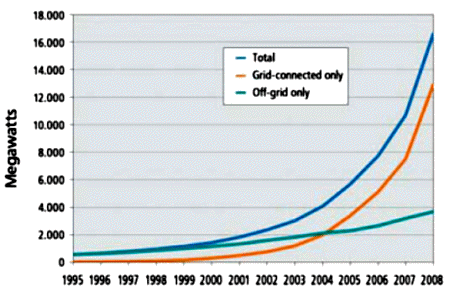
WIn 2008, global installed capacity of solar cells grew by 70%
compared to the previously measured total solar power; about 13 GW was
connected to electricity networks. The leader is Spain, where 0.55 GW
in 2007 grew to 3.2 GW in 2008. Non-grid connected local installations
grow even faster. The total power generated by photovoltaic cells
reached a level of 16 GW in 2008. There is a new trend in the
construction of photovoltaic installations:
- Cells integrated into the buildings,
- Thin-film cells with greater efficiency,
- Solar photovoltaic power plants exceeding 200 kW.
The
world's largest solar power plant of 60 MW is located in Spain. Even
greater plants of this type are built in the U.S. , China, India and
Japan. The largest producers of solar cells are China ( 1.8 GW of
potential capacity/ year), Germany (1.3 GW) and Japan (1.2 GW). The
fastest growing is thin-film cell production, with USA in forefront -
manufacturing thin-calls able to deliver about 270 MW in 2008.
In
addition to the production/research of photovoltaic cells, solar power
plants are being built and upgraded extensively. This type of plants
convert directly solar energy into heat, and then generate electricity
in a conventional steam turbines. Concentrating Solar Power (CSP) is a
system promising a great future if it will be integrated with
complementary natural gas-powered installations. In 2008 we observed
construction of such systems having 50MW or more. Total installed
capacity exceeded 8GW. Even bigger installations are under
construction, having a total summarized power of 6GW. CSP technology
is one of the most technologically advanced. It uses a very diverse
systems. A significant number of new global producers surfaced in
2008. The largest are: Ausra, Bright Source Energy, eSolar, FPL
Energy, Infinia, Sopergy and Stirling Energy Systems in the USA:
Abengoa Solar, Acciona, Iberdrola Renovables, and Sener in Spain, and
Solar Millennium in Germany.
total global producers of solar energy and
their share
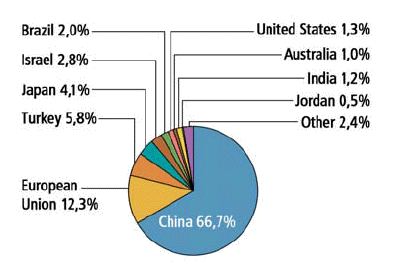
Solar heating systems have
found wide application in all countries that support and are involved
in developing renewable energy. At the end of 2008 the total
output of these systems exceeded 145GWt,
where “t" refers to thermal power output. This means doubling the
capacity when compared to 2004. Nearly 70% of global installed
capacity comes from China, where the pace of development of these
solar installations is fastest. In general, the extraction of heat
from solar radiation is the most efficient and utilizes the simplest
technologies. Spectrum of applications for solar energy has a greatest
range (one example is the market for small devices for local use).
Back to heating: in Germany 200 000 solar heating systems were
installed having total power of 1.5GWt.
At the same time, China reached 14GWt.
This technology has contributed to expansion of “green” constructions
and buildings in Europe, while in developing countries is likely to
play the role of a primary source of heat.
Solar
energy plays an important part of the rural electrification programs
in developing countries. Charitable grants, government and
international support help to erect cheap and easy to use photo-and
thermoelectric systems providing electricity to the most remote
settlements. This applies particularly to places where classic
electrification is uneconomic or impossible to achieve. In India, so
called Remote Village Electrification Program supplied the
photoelectric power to 5400 villages and settlements, provided 435000
houses with light , installed 700 000 street and aerial lights, 7000
water pumps and delivered 637000 solar ovens/cookers (2009 data). This
Program should provide solar energy for 600000 villages by 2032. In
Bangladesh, the World Bank funded the electrification of 400 000
households, and ultimately this project will provide energy for 1.3
million households. Danish-German program, known as "Energizing
Development" (EnDev), provided modern energy for 5 million people, and
by 2015 plans predict to extend the program to supply 10 million
people.
|
|
Hydroelectricity
Large hydroelectric plants
are still being built - scale of construction growing, despite the
protests of environmental organizations. Just in 2008 China launched
more than 25GW of power, and India more than 5GW. Much greater support
is behind small hydropower installations, currently estimated at 85GW.
China is a leader in this field, increasing the installed capacity in
small hydro plants with 4 - 6GW per year.
Geothermal Energy
The installed capacity of
geothermal systems reached level of 10GW (2008 data). Most progress
has been made in the USA where 120 projects delivered a total capacity
of 5GW. About 40 countries are engaged in building and using
geothermal energy installations of more than total 3GW output. In
2008, geothermal heating plants equipped with heat pumps reached a
total power of about 30GWt. Total
municipal and industrial direct geothermal heating (greenhouses,
drying systems, etc.) reached 15GWt.
Bioenergetics
Power plants using biomass as
a primary or secondary fuel, reached around 52GW of power. The biggest
increase was recorded in the European Union and in China, estimated at
2GW. The largest share of biofuels consumed in power plants consists
of waste from agriculture and forestry. Working installations are able
to use biogas from the fermentation of waste from animal farms and
sludge from sewage treatment plants. In Brazil, and Philippines, new
installations consume residues from bioalcohol. Biofuel sector is
growing at an accelerating pace. Compared with the year 2004
production of bioethanol doubled, and biodiesel production observed
six-fold increase. In 2008, the amount of bioethanol used as a
transport fuel, reached 67bln liters. More than half of this amount is
produced in the United States from corn and other cereals. In 2008
Brazil increased two times the supply of bioethanol from sugar cane;
amounting to 27bln liters. Biodiesel production reached a level of
16bln liters, of which nearly 70% is produced and consumed in Europe.
The possibility of producing energy from biomass is limited by
photosynthesis potential. It is estimated that the total energy on the
land converted into biomass is currently 4.560 EJ/year (GPP - Gross
Primary Production). Half of it is consumed in the process of
autotrophic respiration, so the quantity of energy available in the
form of biomass is only 2.280 EJ (NPP - Net Primary Production). Many
studies during last 20 years have been devoted to assess and increase
global bioenergy output. The criterion limiting this output (or
potential) is formed as a forecast for food needs of growing
populations. Considering this factor and assuming unchanged
advancement in bioenergy technologies - total potential can be
estimated between 200 and 500 EJ per year. However complete halt of
expansion of energy crops (meaning waste biomass consumption only)
will reduce the global potential of bioenergy to about only 100 EJ.
Multiplication of
bioenergy/area can and will be obtained by: improved agrotechnology, effective
logistics of harvesting, efficient technologies of converting/connecting biomass
energy to electricity grids. In U.S. corn crops may more than double by 2030.
Considering the current technological capacity of biofuel production, this will
allow to generate 240 mlnT of alcohol and 27 mlnT of biodiesel from the current
unexpanded land area. Subsequent changes will bring progress in biotechnology
and in genetic engineering. Industrial scale of converting green biomass into
ethanol will generate extra inventory of this fuel estimated at 80 mlnT, plus
150 mlnT of feed. The amount of these products will exceed today's demand, so we
may expect significant alternations in the market for fuels and agricultural
products. [8]
Waste Disposal
Use of domestic and industrial waste for energy production creates
controversies mostly due to bad experience with incinerators’
emissions. Since ancient times, incineration has been the choice for
neutralization of unnecessary combustible materials. But today's
enormous amount of waste contains substances that generate toxic
compounds during the combustion. In response to this dilemma, strict
and enforced regulations limit amount of toxic substances that can be
emitted into environment. Necessity for waste disposal methods other
than unlimited storage, combined with limiting regulations drive
current incineration technology to the highest technical level.
Landfills in Europe and in the U.S. have increased difficulties with
the location and the environmental requirements imposed by protective
engineering agencies. To the contrary, production of energy from waste
in modern installations brings income. In the European Union and in
other industrialized countries, strong economic incentives and legal
framework are in place to discourage and eliminate landfills.
Directions as to how waste should be disposed, landfill taxation,
extended producers’ responsibilities - these are examples of the legal
economic policies of the governments. This difference between the
waste storage and use of waste energy, still gives economical
advantages to landfill operators. The main goal therefore, is to
eliminate such difference in order to make production of energy from
waste more attractive (if not profitable).
regional rate of waste generation between
1971-2002 in Mt/year
[10]
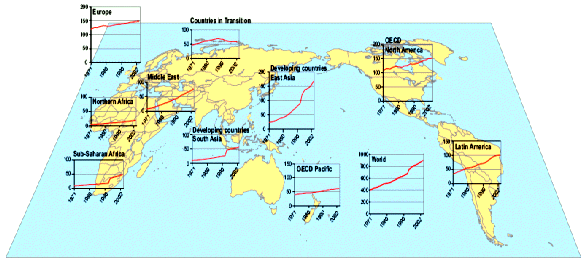
It is
estimated that the global domestic waste load exceeds 900 Mt/year.
Energy from municipal waste incineration is between 6 to 14 MJ/kg,
which is comparable to combustion of peat and brown coal. It follows
that the power based on waste, may generate 5 - 13EJ of heat and
electricity per annum. The recent global consumption of waste for
energy production exceeds 130 Mt/year, that equals around 1 EJ. Biogas
that is collected from landfills and sewage sludge fermentation is
burned to produce more than 0.2 EJ/year. Significant quantities of
biogas are collected by using the mechanical-biological waste
transformation. This technology becomes more and more significant and
increasingly involved in the waste utilization market. [11]
capacity of waste processing by
bio-mechanical method
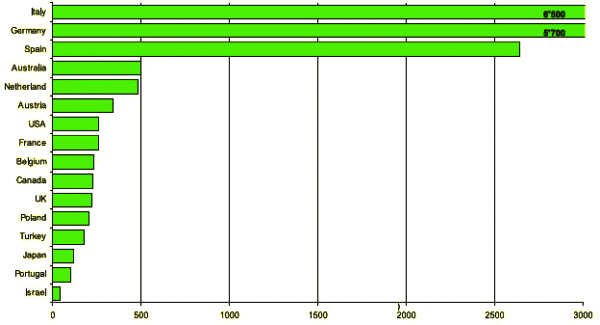
Issue of
greenhouse gas emission becomes noticeable when it comes to waste
management industry. This dictates appropriate changes. Waste
management industry is responsible for the largest (after agriculture)
stream of anthropogenic emissions of methane representing about or
more than 5% of the total impact of the human economy on the
greenhouse effect. Waste disposal that creates energy, has the least
impact on the greenhouse effect, because it eliminates the potential
methane emissions from the landfills. In the near term, preference for
waste incineration can be expressed in the form of special economic
restrictions imposed on methane and other noxious gases being released
from the landfills.
greenhouse gas emissions from waste
management between 1990-2020, expressed in Mt/year of CO2
equivalent

|
|
Summary and final conclusions:
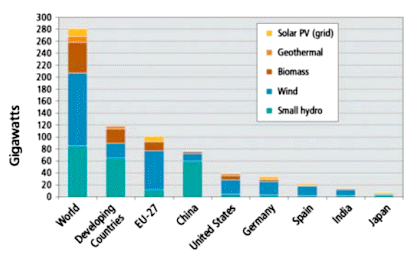
The total
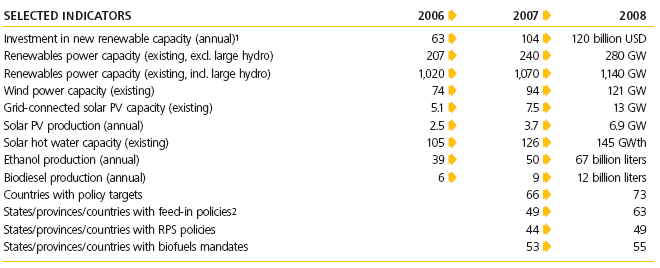
renewable energy production reached 280GW of installed capacity in
2008 (75% increase when compared to 2004). The largest producers are
China (76GW), USA (40GW), Germany (34GW), Spain (22GW), India (13GW),
and Japan (8GW). In the U.S. and European Union increase of power from
renewable energy was greater than from conventional systems (energy
from gas, coal, oil and nuclear altogether). However, renewable energy
still represents a small fraction of total energy production.
shares of installed capacity of renewable
energy for selected countries (large hydro system not included)
 |
|
When
including large hydropower installations, renewable energy production
reached 1,140GW. Within the world’s total energy generated by humans,
the most primitive households kitchen hearths continue to produce five
times more energy than technologies based on renewable energy. If we
could improve the efficiency of home heating equipment in third world
countries, the consumption of biomass for these purposes would be
significantly reduced. Along these lines, the World Bank has
implemented a support program, facilitating the purchase of 1 million
efficient kitchen stoves for Ethiopia's population. More than 500
manufacturers of such appliances have been trained as experts in
energy efficient hearth stoves. However, we are just beginning to
probe and utilize advanced renewable energy technologies worldwide.
Desired and awaited technical solutions are still at the stage of
research and implementation. Without the strong support from
governments and international institutions, renewable energy sector
will not be able to replace fossil fuels in the global energy market. |
|
|
|
biomass and
energy
Biomass is a
versatile raw material that can be used for production of heat, power, transport
fuels, and bioproducts. [12]When produced and used on a sustainable basis, it is a
carbon-neutral carrier and can make a large contribution to reducing greenhouse
gas emissions. Currently, biomass-driven combined heat and power, co-firing, and
combustion plants provide reliable, efficient, and clean power and heat.
Production and use of biofuels are growing at a very rapid pace. Sugar
cane-based ethanol is already a competitive biofuel in tropical regions. In the
medium term, ethanol and high-quality synthetic fuels from woody biomass are
expected to be competitive at crude oil prices above US$45 per barrel.
Feedstocks for
bioenergy plants can include residues from agriculture, forestry, and the wood
processing industry, as well as biomass produced from degraded and marginal
lands. Biomass for energy may also be produced on good quality agricultural and
pasture lands without jeopardising the world's food and feed supply if
agricultural land use efficiency is increased, especially in developing regions.
Revenues from biomass and biomass-derived products could provide a key lever for
rural development and enhanced agricultural production. Certification schemes
are already established to ensure sustainable production of forest biomass and
could be adopted to guide residue recovery and energy crop production. Biomass
utilisation will be optimised by processing in biorefineries for both products
and energy carriers.
Given these
possibilities, the potential contribution of bioenergy to the world energy
demand of some 467 EJ per year (2004) may be increased considerably compared to
the current 45-55 EJ. A range from 200-400 EJ per year in biomass harvested for
energy production may be expected during this century. Assuming expected average
conversion efficiencies, this would result in 130-260 EJ per year of transport
fuels or 100-200 EJ per year of electricity. Most countries have biomass
resources available, or could develop such a resource, making biomass a more
evenly spread energy supply option across the globe. It is a versatile energy
source, which can be used for producing power, heat, liquid and gaseous fuels,
and also serves as a feedstock for materials and chemicals.
Current use of
biomass for energy
On average, in the
industrialised countries biomass contributes less than 10% to the total energy
supplies, but in developing countries the proportion is as high as 20-30%. In a
number of countries biomass supplies 50-90% of the total energy demand. A
considerable part of this biomass use is, however, non-commercial and relates to
cooking and space heating, generally by the poorer part of the population. Part
of this use is commercial, i.e., the household fuelwood in industrialised
countries and charcoal and firewood in urban and industrial areas in developing
countries, but there are very limited data on the size of those markets. An
estimated 6-9 EJ are included in this category [WEA 2000, WEA 2004].
Modern bioenergy
(commercial energy production from biomass for industry, power generation, or
transport fuels) makes a lower, but still very significant contribution (some 7
EJ per year in 2000), and this share is growing. It is estimated that by 2000,
40 GW of biomass-based electricity production capacity was installed worldwide
(producing 0.6 EJ electricity per year) and 200 GW of heat production capacity
(2.5 EJ heat per year) [WEA 2000]. Biomass combustion is responsible for over
90% of the current production of secondary energy carriers from biomass.
Combustion for domestic use (heating, cooking), waste incineration, use of
process residues in industries, and state-of-the-art furnace and boiler designs
for efficient power generation all play their role in specific contexts and
markets.
Biofuels, mainly
ethanol produced from sugar cane and surpluses of corn and cereals, and to a far
lesser extent biodiesel from oilseed crops, represent a modest 1.5 EJ (about
1.5%) of transport fuel use worldwide. Global interest in transport biofuels is
growing, particularly in Europe, Brazil, North America, and Asia (most notably
Japan, China and India) [WEA 2000, WEA 2004, IEA 2006b]. Global ethanol
production has more than doubled since 2000, while production of biodiesel,
starting from a much smaller base, has expanded nearly threefold. In contrast,
crude oil production has increased by only 7% since 2000 [WorldWatch Institute
2007].
Bioenergy policies and
market
Biomass and
bioenergy are now a key option in energy policies [Schlamadinger 2006]. Security
of supply, an alternative for mineral oil and reduced carbon emissions are key
reasons. Targets and expectations for bioenergy in many national policies are
ambitious, reaching 20-30% of total energy demand in various countries.
Similarly, long-term energy scenarios also contain challenging targets.
Sufficient biomass resources and a well-functioning biomass market that can
assure reliable, sustainable, and lasting biomass supplies are crucial
preconditions to realise such ambitions. To date, various countries have
considerable experience with building biomass markets and linking available
resources with market demand. Examples are found in Brazil, Sweden, Finland,
Canada, and the Netherlands. Relatively recently, international trade in biomass
resources has become part of the portfolio of market dealers and volumes traded
worldwide have increased at a very rapid pace with an estimated doubling of
volumes in several markets over the past few years [Faaij 2005].
Biomass resources
Various biomass
resource categories can be considered: residues from forestry and agriculture,
various organic waste streams and, most importantly, the possibilities for
dedicated biomass production on land of different categories, e.g., grass
production on pasture land, wood plantations and sugar cane on arable land, and
low productivity afforestation schemes for marginal and degraded lands. The
potential for energy crops depends largely on land availability considering that
worldwide a growing demand for food has to be met, combined with environmental
protection, sustainable management of soils and water reserves, and a variety of
other sustainability requirements. Given that a major part of the future biomass
resource availability for energy and materials depends on these complex and
related factors, it is not possible to present the future biomass potential in
one simple figure.
Table provides a
synthesis of analyses of the longer term potential of biomass resource
availability on a global scale. Also, a number of uncertainties are highlighted
that can affect biomass availability. These estimates are sensitive to
assumptions about crop yields and the amount of land that could be made
available for the production of biomass for energy uses, including biofuels.
Critical issues include:
- Competition for
water resources: Although the estimates presented in Table 1 generally exclude
irrigation for biomass production, it may be necessary in some countries where
water is already scarce.
- Use of fertilisers and pest control techniques: Improved farm management and
higher productivity depend on the availability of fertilisers and pest control.
The environmental effects of heavy use of fertiliser and pesticides could be
serious.
- Land-use: More intensive farming to produce energy crops on a large-scale may
result in losses of biodiversity. Perennial crops are expected to be less
harmful than conventional crops such as cereals and seeds, or even able to
achieve positive effects. More intensive cattle-raising would also be necessary
to free up grassland currently used for grazing.
- Competition with food and feed production: Increased biomass production for
biofuels out of balance with required productivity increases in agriculture
could drive up land and food prices.
Table 1: Overview of the
global potential of biomass for energy (EJ per year) to 2050 for a number of
categories and the main preconditions and assumptions that determine these
potentials [Berndes 2003, Smeets 2007, Hoogwijk 2005a].
|
Biomass
category |
Main assumptions and remarks |
Energy
potential in biomass up to 2050 |
|
Energy farming on current
agricultural land |
Potential land surplus: 0-4 Gha
(average: 1-2 Gha). A large surplus requires structural adaptation towards
more efficient agricultural production systems. When this is not feasible,
the bioenergy potential could be reduced to zero. On average higher yields
are likely because of better soil quality: 8-12 dry tonne/ha/yr* is assumed. |
0 – 700 EJ
(more average development:
100 – 300 EJ) |
|
Biomass production on marginal
lands. |
On a global scale a maximum land
surface of 1.7 Gha could be involved. Low productivity of 2-5 dry
tonne/ha/yr.* The net supplies could be low due to poor economics or
competition with food production. |
<60 – 110 EJ |
|
Residues from agriculture |
Potential depends on
yield/product ratios and the total agricultural land area as well as type of
production system. Extensive production systems require re-use of residues
for maintaining soil fertility. Intensive systems allow for higher
utilisation rates of residues. |
15 – 70 EJ |
|
Forest residues |
The sustainable energy potential
of the world’s forests is unclear – some natural forests are protected. Low
value: includes limitations with respect to logistics and strict standards
for removal of forest material. High value: technical potential. Figures
include processing residues |
30 - 150 EJ |
|
Dung |
Use of dried dung. Low estimate
based on global current use. High estimate: technical potential. Utilisation
(collection) in the longer term is uncertain |
5 – 55 EJ |
|
Organic wastes |
Estimate on basis of literature
values. Strongly dependent on economic development, consumption and the use
of bio-materials. Figures include the organic fraction of MSW and waste
wood. Higher values possible by more intensive use of bio-materials. |
5 – 50 EJ |
|
Combined potential |
Most pessimistic scenario: no
land available for energy farming; only utilisation of residues. Most
optimistic scenario: intensive agriculture concentrated on the better
quality soils. In parentheses: average potential in a world aiming for
large-scale deployment of bioenergy. |
40 – 1100 EJ |
* Heating value: 19 GJ/tonne dry
matter.
Focussing on the
more average estimates of biomass resource potentials, energy farming on current
agricultural (arable and pasture) land could, with projected technological
progress, contribute 100 - 300 EJ annually, without jeopardising the world's
future food supply. A significant part of this potential (around 200 EJ in 2050)
for biomass production may be developed at low production costs in the range of
$2/GJ assuming this land is used for perennial crops [Hoogwijk 2005b, WEA 2000].
Another 100 EJ could be produced with lower productivity and higher costs, from
biomass on marginal and degraded lands. Regenerating such lands requires more
upfront investment, but competition with other land-uses is less of an issue and
other benefits (such as soil restoration, improved water retention functions)
may be obtained, which could partly compensate for biomass production costs.
Combined and using the more average potential estimates, organic wastes and
residues could possibly supply another 40-170 EJ, with uncertain contributions
from forest residues and potentially a significant role for organic waste,
especially when biomaterials are used on a larger scale. In total, the bioenergy
potential could amount to 400 EJ per year during this century. This is
comparable to the total current fossil energy use of 388 EJ. Key to the
introduction of biomass production in the suggested orders of magnitude is the
rationalisation of agriculture, especially in developing countries. There is
room for considerably higher landuse efficiencies that can more than compensate
for the growing demand for food [Smeets 2007]. The development and deployment of
perennial crops (in particular in developing countries) is of key importance for
bioenergy in the long run. Regional efforts are needed to deploy biomass
production and supply systems adapted to local conditions, e.g., for specific
agricultural, climatic, and socio-economic conditions.
Conversion
Conversion routes
for producing energy carriers from biomass are plentiful. Figure 1 illustrates
the main conversion routes that are used or under development for production of
heat, power and transport fuels. Key conversion technologies for production of
power and heat are combustion and gasification of solid biomass, and digestion
of organic material for production of biogas. Main technologies available or
developed to produce transportation fuels are fermentation of sugar and starch
crops to produce ethanol, gasification of solid biomass to produce syngas and
synthetic fuels (like methanol and high quality diesel), and extraction of
vegetal oils from oilseed crops, which can be esterified to produce biodiesel.
The various technological options are in different stages of deployment and
development. Tables 2 and 3 provide a compact overview of the main technology
categories and their performance with respect to energy efficiency and energy
production costs. The end-use applications of section discusses the likely
deployment of various technologies for key markets in the short- and the
long-term.
Figure 1: Main conversion options
for biomass to secondary energy carriers [WEA 2000].

Table 2: Overview of current and
projected performance data for the main conversion routes of biomass to power
and heat and summary of technology status and deployment. Due to the variability
of technological designs and conditions assumed, all costs are indicative [van
Loo 2002, Knoef 2005, USDOE 1998, Dornburg 2001].
|
Conversion
option |
Typical
capacity |
Net
efficiency (LHV basis) |
Investment
cost ranges ($/kW) |
Status and
deployment |
|
Biogas production via anaerobic
digestion |
Up to several MWe |
10-15% electrical (assuming
on-site production of electricity) |
|
Well established technology.
Widely applied for homogeneous wet organic waste streams and waste water. To
a lesser extent used for heterogeneous wet wastes such as organic domestic
wastes. |
|
Landfill gas production |
Generally several hundred kWe |
As above. Very attractive GHG
mitigation option. |
|
Widely applied and, in general, part of waste
treatment policies of many countries. |
|
Combustion for heat |
Residential:
5-50 kWth
Industrial:
1-5 MWth |
Low for classic fireplaces, up
to 70-90% for modern furnaces. |
~100/kWth for logwood
stoves,
300-800/kWth for automatic furnaces,
300-700/kWth for larger furnaces |
Classic firewood use still widely deployed, but
not growing. Replacement by modern heating systems (i.e., automated, flue
gas cleaning, pellet firing) in e.g., Austria, Sweden, Germany ongoing for
years. |
|
Combined heat and power |
0.1-1 MWe
1-20 MWe |
60-90% (overall)
80-100% (overall) |
3500 (Stirling)
2700 (ORC)
2500-3000 (Steam turbine) |
Stirling engines, steam screw type engines,
steam engines, and organic rankine cycle (ORC) processes are in
demonstration for small-scale applications between 10 kW and 1 MWe.
Steam turbine based systems 1-10 MWe are widely deployed
throughout the world. |
|
Combustion for power generation |
20->100 MWe |
20-40% (electrical) |
2.500 –1600 |
Well established technology, especially deployed
in Scandinavia and North America; various advanced concepts using fluid bed
technology giving high efficiency, low costs and high flexibility.
Commercially deployed waste to energy (incineration) has higher capital
costs and lower (average) efficiency. |
|
Co-combustion of biomass with coal |
Typically 5-100 MWe
at existing coalfired stations. Higher for new multifuel power plants. |
30-40% (electrical) |
100-1000 + costs of existing
power station (depending on biomass fuel + co-firing configuration) |
Widely deployed in various countries, now mainly
using direct combustion in combination with biomass fuels that are
relatively clean. Biomass that is more contaminated and/or difficult to
grind can be indirectly co-fired, e.g., using gasification processes.
Interest in larger biomass co-firing shares and utilisation of more advanced
options is increasing. |
|
Gasification for heat production |
Typically hundreds kWth
|
80-90% (overall) |
Several hundred/ kWth,
depending on capacity |
Commercially available and deployed; but total
contribution to energy production to date limited. |
|
Gasification/CHP using gas engines |
0.1 – 1 MWe |
15-30% (electrical)
60-80% (overall) |
1.000-3.000 (depends on
configuration) |
Various systems on the market. Deployment
limited due to relatively high costs, critical operational demands, and fuel
quality. |
|
Gasification using combined cycles for
electricity (BIG/CC) |
30-200 MWe |
40-50% (or higher; electrical) |
5.000 – 3.500 (demos)
2.000 – 1.000 (longer term, larger scale) |
Demonstration phase at 5-10 MWe range obtained.
Rapid development in the nineties has stalled in recent years. First
generation concepts prove capital intensive. |
|
Pyrolysis for production of bio-oil |
10 tonnes/hr in the shorter term
up to 100 tonnes/hr in the longer term. |
60-70% biooil/feedstock and 85%
for oil + char. |
Scale and biomass supply
dependent; Approx 700/kWth input for a 10 MWth input
unit |
Commercial technology available. Bio-oil is used
for power production in gas turbines, gas engines, for chemicals and
precursors, direct production of transport fuels, as well as for
transporting energy over longer distances. |
Table 3: Overview of current
and projected performance data for the main conversion routes of biomass to
transport fuels. Due to the variability of data in the various references and
conditions assumed, all cost figures should be considered as indicative
[Hamelinck 2006, IEA 2006b, Ogden 1999, IEA 2004, Lynd 1996].
|
Concept |
Energy efficiency (HHV) + energy inputs |
Estimated production costs (€/GJ fuel) |
|
Short-term |
Long-term |
Short-term |
Long-term |
|
Hydrogen: via biomass
gasification and subsequent syngas processing. Combined fuel and power
production possible; for production of liquid hydrogen additional
electricity use should be taken into account. |
60% (fuel only) (+ energy input of 0.19 GJe/GJ
H2 for liquid hydrogen) |
55% (fuel) 6% (power) (+ 0.19 GJe/GJ
H2 for liquid hydrogen) |
9 - 12 |
5 - 8 |
|
Methanol: via biomass gasification and
subsequent syngas processing. Combined fuel and power production possible
|
55% (fuel only) |
48% (fuel)
12% (power) |
10-15 |
6-8 |
|
Fischer-Tropsch liquids: via biomass
gasification and subsequent syngas processing. Combined fuel and power
production possible |
45% (fuel only) |
45% (fuel)
10% (power) |
12-17 |
7-9 |
|
Ethanol from wood: production takes place
via hydrolysis techniques and subsequent fermentation and includes
integrated electricity production of unprocessed components. |
46% (fuel)
4% (power) |
53% (fuel)
8% (power) |
12-17 |
5-7 |
|
Ethanol from sugar beet: production via
fermentation; some additional energy inputs are needed for distillation. |
43% (fuel only)
0.065 GJe +
0.24 GJth/GJ EtOH |
25-35 |
20-30 |
20-30 |
|
Ethanol from sugar cane: production via
cane crushing and fermentation and power generation from the bagasse. Mill
size, advanced power generation and optimised energy efficiency and
distillation can reduce costs further in the longer term. |
85 litre EtOH per tonne of wet cane,
generally energy neutral with respect to power and heat |
95 litre EtOH per tonne of wet cane.
Electricity surpluses depend on plant lay-out and power generation
technology. |
8-12 |
7-8 |
|
Biodiesel RME: takes place via extraction
(pressing) and subsequent esterification. Methanol is an energy input. For
the total system it is assumed that surpluses of straw are used for power
production. |
88%; 0.01 GJe + 0.04
GJ MeOH per GJ output.
Efficiency of power generation in the shorter term, 45%; in the longer term,
55% |
25-40 |
20-30 |
- Assumed biomass price of clean
wood: $2/GJ. RME cost figures varied from $20/GJ (short-term) to $12/GJ (longer
term), for sugar beet a range of $8 to $12/GJ is assumed. All figures exclude
distribution of the fuels to fuelling stations.
- For equipment costs, an interest rate of 10%, economic lifetime of 15 years is
assumed. Capacities of conversion unit are normalised on 400 MWth
input in the shorter term and >1000 MWth input using advanced
technologies and optimised systems in the longer term.
- Diesel and gasoline production costs vary strongly depending on the oil
prices, but for indication: recent cost ranges (end 90s till 2010) are between
$4 and $9/GJ. Longer term projections give estimates of roughly $6 to $10/GJ.
Note that the transportation fuel retail prices are usually dominated by
taxation and can vary between $0,50 and $1,30 /litre depending on the country in
question.
Short-term
represents best available technology or the currently noncommercial systems
which could be built around 2010. Long-term represents technology with
considerable improvement, large-scale deployment, and incorporation of process
innovations that could be realised around 2040. This is also the case for the
biomass supplies, assuming biomass production and supply costs around $2/GJ for
plants which are close to the biomass production areas
Biomass-based energy
carriers are competitive alternatives in situations where cheap, or even
"negative-cost", biomass residues or wastes are available. In order to make
large-scale bioenergy use competitive with fossil fuels, the conversion
technologies, biomass production (especially from dedicated biomass crops), and
total bioenergy systems require further development and optimisation. Table 4
gives an overview of the perspectives for bioenergy processes combined with main
biomass resources.
Table 4: Generic overview of
performance projections for different biomass resource, technology combinations
and energy markets on shorter (~5 years) and longer (>20 years) timeframes. [WEA
2004, IEA 2006b, Faaij 2006, IPCC 2007, Knoef 2005, van Loo 2002]
|
Biomass
resource |
Heat |
Electricity |
Transport
fuels |
|
|
Short-term;
stabilising market |
Longer term |
Short-term; strong
growth market worldwide |
Longer term;
growth may
stabilise due
to competition
of alternative
options |
Short-term;
growing market,
but highly policy
driven |
Longer term;
potential key
market for
cultivated
biomass. |
|
Organic wastes (i.e., MSW etc.) |
Undesirable for domestic
purposes (emissions); industrial use attractive; in general competitive. |
Especially attractive in
industrial setting and CHP. (advanced combustion and gasification for fuel
gas) |
<$0,03-0,05/kWh for
state-of-the-art waste incineration and cocombustion. Economics strongly
affected by tipping fees and emission standards. Landfill gas recovery and
utilisation is generally a competitive utilisation scheme. |
Similar range; improvements in
efficiency and environmental performance, in particular through IG/CC
technology at large-scale. |
N.A. |
In particular possible via gasification routes
(see below) |
Residues:
● Forestry
● Agriculture |
Major market in developing
countries (<$0,01-0,05 /kWhth); stabilising market in
industrialised countries. |
Especially attractive in
industrial setting and CHP. Advanced heating systems (residential) possible
but not on global scale. |
$0,04-0,12 /kWh (see below;
major variable is supply costs of biomass); lower costs also in CHP
operation and industrial setting depending on heat demand. |
$0,02-8 /kWh (see below; major
variable is supply costs of biomass) |
N.A. |
$5-10/GJ; low costs obtainable with
lignocellulosic biomass (<US$2/GJ) advanced hydrolysis techniques and
large-scale gasification (i.e., <1000 MWth) for MeOH/H2/FT,
as well as improved sugar cane production and subsequent ethanol production
in optimised distilleries. |
Energy crops:
● oil seeds
● sugar/starch
● sugar cane
● perennial crops (i.e., short rotation cropping trees and grasses) |
N.A. |
Unlikely market due to high
costs of feedstock for lower value energy carrier; possible niches for
pellet or charcoal production in specific contexts. |
$0,05-0,15 /kWh High costs for
smallscale power generation with high-quality feedstock. Lower costs for
large-scale (i.e., >100 MWth) stateof- the-art combustion (wood,
grasses) and co-combustion. |
$0,03-8 /kWh Low costs
especially possible with advanced cofiring schemes and BIG/CC technology
over 100-200 MWe. |
$8-25 /GJ; lower figures for ethanol from sugar
cane; higher for biodiesel (RME) and sugar and starch crops in Europe and
North America. |
Heat and power from
biomass
Production of heat
and electricity dominate current bioenergy use. At present, the main growth
markets for bioenergy are the European Union, North America, Central and Eastern
Europe, and Southeast Asia (Thailand, Malaysia, Indonesia), especially with
respect to efficient power generation from biomass wastes and residues and for
biofuels. Two key industrial sectors for application of state-of-theart biomass
combustion (and potentially gasification) technology for power generation are
the paper and pulp sector and cane-based sugar industry. Power generation from
biomass by advanced combustion technology and co-firing schemes is a growth
market worldwide. Mature, efficient, and reliable technology is available to
turn biomass into power. In various markets the average scale of biomass
combustion schemes rapidly increases due to improved availability of biomass
resources and economies of scale of conversion technology. Competitive
performance compared to fossil fuels is possible where lower cost residues are
available particularly in co-firing schemes, where investment costs can be
minimal.
Specific (national)
policies such as carbon taxes or renewable energy support can accelerate this
development. Gasification technology (integrated with gas turbines/combined
cycles) offers even better perspectives for power generation from biomass in the
medium term and can make power generation from energy crops competitive in many
areas in the world once this technology has been proven on a commercial scale.
Gasification, in particular larger scale circulating fluidised bed (CFB)
concepts, also offers excellent possibilities for co-firing schemes. With
biomass prices of about $2/GJ, state-of-the-art combustion technology at a scale
of 40-60 MWe can result in electricity costs of around $0,04 to
0,06/kWh produced. Co-combustion, particularly at efficient coal-fired power
plants, can result in similar or lower cost figures, largely depending on the
feedstock costs. When Biomass Integrated Gasification/Combined Cycle technology
becomes available commercially, electricity costs could drop further to about
$0,03 to $0,04/kWh, especially with higher electrical efficiencies. For larger
scales (i.e., over 100 MWe) cultivated biomass will be able to compete with
fossil fuels in many situations [Knoef 2005, Williams 1996] The benefits of
lower specific capital costs and increased efficiency may in many cases outweigh
the increase in costs and energy use for transport for considerable distances
once a reasonably well-developed infrastructure is in place.
Decentralised power
(and heat) production is generally more expensive due to higher capital costs
and lower efficiencies than large-scale systems, but could be economical for
off-grid applications. The costs that could ultimately be obtained with e.g.,
gasifier/diesel systems are still unclear and depend strongly on what emissions
and fuel quality are considered acceptable. CHP generation is generally
attractive when heat is required with high load factors. Traditional use of
biomass, in particular, is for production of heat for cooking and space heating.
It is not expected that this traditional use will diminish in coming decades.
Nevertheless, modernising bioenergy use for poorer populations is an essential
component of sustainable development schemes in many countries. This creates
opportunities and major markets - for example, for improved stoves, and
production of high quality fuels for cooking (e.g., biofuel-based such as
ethanol and Fischer-Tropsch liquids) - with considerable efficiency and health
advantages. Furthermore, digesters producing biogas on a village level, can
prove very effective in various countries (such as China and India) in solving
waste treatment problems and supplying high-quality energy carriers (clean gas
and power when used in gas engines) along with hygienic bio-fertilisers. For
commercial heat production, reliable technology (e.g., boilers, advanced stoves,
etc.) is commercially available for many industrial, district and domestic
heating applications. Also, combined heat and power generation seems attractive
to various markets. The production of heat and process steam from biomass for
specific industrial applications is an economically attractive option, as is
evident in the paper and pulp and sugar industries worldwide.
Liquid and gaseous
fuels from biomass
Generally, the
economics of "traditional" fuels like rapeseed methyl esther and ethanol from
starch and sugar crops in moderate climate zones are unlikely to reach truly
competitive price levels, although trade barriers such as tariffs and quotas can
be used to increase the economic performance of these fuels [IEA 2004]. Also,
the environmental impacts of growing annual crops are not as good as perennials
because per unit of product considerably higher inputs of fertilisers and
agrochemicals are needed. In addition, annual crops on average need better
quality land than perennials to achieve good productivities. Perennial crops can
also be grown on marginal lands, thereby achieving other potential benefits such
as soil quality improvement. A key exception under "conventional" biofuels is
production of ethanol from sugar cane in tropical regions where good soils are
available. For countries where sugar cane production is feasible, commercially
available technology allows for production of relatively low-cost ethanol.
Brazilian experience shows that ethanol production is competitive with gasoline
at oil prices over US$60/barrel [Goldemberg 2004].
Ethanol production
capacity based on sugar cane is increasing substantially in African, Latin
American, and Asian (e.g., India, Thailand, and China) countries. Furthermore,
better use of cane residues (e.g., for power generation or use via hydrolysis
processes) can further improve the performance of cane-based ethanol production.
The production of methanol (and di-methyl esters or DME), hydrogen,
Fischer-Tropsch liquids, and ethanol produced from lignocellulosic biomass
offers much better perspectives and competitive fuel prices in the longer term,
i.e., between 2010 and 2020. Partly, this is because of the inherently lower
feedstock prices and versatility of producing lignocellulosic biomass under
varying circumstances. Furthermore, the (advanced) gasification and hydrolysis
technologies under development have the potential for efficient and competitive
production of fuels, sometimes combined with co-production of electricity
[Hamelinck 2006]. Comprehensive research and development strategies for such
technologies are required, though. Such strategies should focus not only on
development of technologies but also on long-term deployment and building the
infrastructure and markets required for those technologies.
Market development and
international trade
Biofuel and biomass
trade flows are modest compared to total bioenergy production but are growing
rapidly. Trade takes place between neighbouring regions or countries, but
increasingly trading is occurring over long distances. The possibilities for
exporting biomass-derived commodities to the world's energy markets can provide
a stable and reliable demand for rural regions in many developing countries,
thus creating an important incentive and market access that is much needed. For
many rural communities in developing countries such a situation would offer good
opportunities for socio-economic development. Sustainable biomass
production may also contribute to the sustainable management of natural
resources. Importing countries on the other hand may be able to fulfil
cost-effectively their GHG emission reduction targets and diversify their fuel
mix. Given that several regions of the world have inherent advantages for
producing biomass (including lignocellulosic resources) and biofuels in terms of
land availability and production costs, they may gradually develop into net
exporters of biomass and biofuels. International transport of biomass (or energy
carriers from biomass) is feasible from both the energy and the cost points of
view. The import of densified or pre-treated lignocellulosic biomass from
various world regions may be preferred, especially for second generation
biofuels, where lignocellulosic biomass is the feedstock and large-scale
capitalintensive conversion capacity is required to achieve sound economics.
This is a situation comparable to that of current oil refineries in major ports
which use oil supplies from around the globe.
Very important is
the development of a sustainable, international biomass market and trade. Proper
standardisation and certification procedures are to be developed and implemented
to secure sustainable biomass production, preferably on the global level.
Currently, this is a priority for various governments, market players, and
international bodies. In particular, competition between production of food,
preservation of forests and nature and use of land for biomass production should
be avoided. As argued, this is possible by using lignocellulosic biomass
resources that can come from residues and wastes, which are grown on non-arable
(e.g., degraded) lands, and in The Barra Grande alcohol and sugar production
plant in Brazil produces ethanol from sugar cane on a commercial scale
particular by increased productivity in agricultural and livestock production.
Demonstration of such combined development where sustainable biomass production
is developed in conjunction with more efficient agricultural management is a
challenge. However, this is how bioenergy could contribute not only to renewable
energy supplies and reducing GHG emissions, but also to rural development [Faaij
2006].
Competing markets for
biomass
Total primary (the
presumed mix of fossil fuels, renewables and nuclear) energy demand in 2050
varies between about 800 EJ and 1,400 EJ. As discussed previously, the total
primary biomass supplies in 2050 could amount to 200-400 EJ. This is
conservative relative to the increased availability of primary biomass. Assuming
conversion to transport fuels with an expected average conversion efficiency of
65%, this would result in 130-260 EJ fuel. This is up to double the current
demand and a similar range to the expected demand. Conversion to power with an
assumed average efficiency of 50% logically results in 100-200 EJe, also a
similar range to the expected future demand. Additional future demand for (new)
biomaterials such as bio-plastics could add up to 50 EJ halfway through this
century [Hoogwijk 2003]. It is clear, therefore, that biomass can make a very
large contribution to the world's future energy supply. This contribution could
range from 20% to 50%. The higher value is possible when growth in energy demand
is limited; for example, by strongly increased energy efficiency.
Biomass cannot realistically cover the whole world's future energy demand. On
the other hand, the versatility of biomass with the diverse portfolio of
conversion options, makes it possible to meet the demand for secondary energy
carriers, as well as biomaterials. Currently, production of heat and electricity
still dominate biomass use for energy. The question is therefore what the most
relevant future market for biomass may be.
For avoiding CO2
emissions, replacing coal is at present a very effective way of using biomass.
For example, co-firing biomass in coal-fired power stations has a higher avoided
emission per unit of biomass than when displacing diesel or gasoline with
ethanol or biodiesel. However, replacing natural gas for power generation by
biomass, results in levels of CO2 mitigation similar to secondgeneration
biofuels. Net avoided GHG emissions therefore depend on the reference system and
the efficiency of the biomass production and utilisation chain. In the future,
using biomass for transport fuels will gradually become more attractive from a
CO2 mitigation perspective because of the lower GHG emissions for producing
second-generation biofuels and because electricity production on average is
expected to become less carbon-intensive due to increased use of wind energy, PV
and other solar-based power generation, carbon capture and storage technology,
nuclear energy, and fuel shift from coal to natural gas. In the shorter
term, however, careful strategies and policies are needed to avoid brisk
allocation of biomass resources away from efficient and effective utilisation in
power and heat production or in other markets, e.g., food. How this is to be
done optimally will differ from country to country.
The use of biomass
for biomaterials will increase, both in wellestablished markets (such as paper,
construction) and for possibly large new markets (such as bio-chemicals and
plastics) as well as in the use of charcoal for steel making. This adds to the
competition for biomass resources, in particular forest biomass, as well as land
for producing woody biomass and other crops. The additional demand for
bio-materials could surpass the current global biomass use (which is some 10% of
the global energy use) [Hoogwijk 2003]. However, increased use of bio-materials
does not prohibit the production of biofuels (and electricity and heat) per se.
Construction wood ends up as waste wood, paper (after recycling) as waste paper,
and bio-plastics in municipal solid waste [Dornburg 2005]. Such waste streams
still qualify as biomass feedstock and are available, often at low or even
negative costs. Cascading biomass over time in fact provides an essential
strategy to optimise the CO2 mitigation effect of biomass resources. The reports
[IPCC 2007] that the largest sustained mitigation benefit will result from a
sustainable forest management strategy aimed at maintaining or increasing forest
carbon stocks, while producing an annual sustained yield of timber, fibre, or
energy from the forest. This could for example involve conventional forests
producing material cascades (e.g., solid wood products, reconstituted
particle/fibre products, paper products) with wood or fibre that cannot be
reused/recycled being used for energy.
Comparison with other
energy supply options
Table 5 provides a
general overview of the current use, and the technical and theoretical energy
potentials of various renewables: biomass, wind energy, solar energy,
hydropower, and geothermal energy. Current and potential future energy
production costs of electricity, heat, and fuels are given in Table 6.
State-of-the-art scenario studies on energy supply and mitigation of climate
change agree that all climate-friendly energy options are needed to meet the
future world's energy needs and simultaneously drastically reduce GHG emissions.
Intermittent sources such as wind and solar energy have good potential, but
their deployment is also constrained by their integration into electricity
grids. In addition, electricity production from solar energy is still expensive.
Hydropower has a limited potential [IPCC 2007] and commercial deployment of
geothermal and ocean energy, despite their large theoretical potentials, has
proved to be complex. Biomass in particular can play a major and vital role in
production of carbon-neutral transport fuels of high quality as well as
providing feedstocks for various industries (including chemical). This is a
unique property of biomass compared to other renewables and which makes biomass
a prime alternative to the use of mineral oil. Given that oil is the most
constrained of the fossil fuel supplies, this implies that biomass is
particularly important for improving security of energy supply on the global as
well on a national level. In addition, competitive performance is already
achieved in many situations using commercial technologies especially for
producing heat and power. It is therefore expected that biomass will remain the
most important renewable energy carrier for many decades to come.
Table 5: Overview of current use, and the
technical and theoretical potentials of different renewable energy options [WEA,
2000].
|
Resource |
Current
use (EJ) |
Technical
Potential (EJ) |
Theoretical
potential (EJ) |
|
Biomass energy |
50 |
200 - 400 |
2,900 |
|
Hydropower |
9 |
50 |
147 |
|
Solar energy |
0.1 |
>1,500 |
3,900,000 |
|
Wind energy |
0.12 |
640 |
6,000 |
|
Geothermal energy |
0.6 |
5,000 |
140,000,000 |
|
Ocean energy |
NA |
NA |
>140,000,000 |
|
Total |
56 |
>7,600 |
>144,000,000 |
Table 6: Cost ranges (Euro-cents per unit)
for production of electricity, heat, and fuel from various renewable energy
options at present and longer term [WEA, 2004].
|
Technology |
Current
energy cost |
Potential
long-term future energy cost (2050) |
|
Biomass energy (based on energy
crops as feedstock)
● electricity
● heat
● biofuels |
$0.05-0.15/kWhe
$0.01-0.05/kWht
$0.08-0.25/GJf |
$0.04-0.10/kWhe
$0.01-0.05/kWht
$0.06-0.10/GJf |
|
Wind electricity |
$0.05-0.13/kWhe |
$0.03-0.10/kWhe |
|
Solar PV electricity |
$0.25-1.25/kWhe |
$0.05-0.25/kWhe |
|
Solar thermal electricity |
$0.12-0.18/kWhe |
$0.04-0.10/kWhe |
|
Low temperature solar heat |
$0.03-0.20/kWht |
$0.02-0.20/kWht |
|
Hydroelectricity |
$0.02-0.10/kWhe |
$0.02-0.10/kWhe |
Geothermal energy
● electricity
● heat |
$0.02-0.10/kWhe
$0.005-0.05/kWhe |
$0.01-0.10/kWhe
$0.005-0.05/kWhe |
Conclusion
Biomass is the most
important renewable energy option at present and is expected to maintain that
position during the first half of this century and likely beyond that [IPCC
2007, IEA 2006a]. Currently, combined heat and power (CHP), co-firing and
various combustion concepts provide reliable, efficient, and clean conversion
routes for converting solid biomass to power and heat. Production and use of
biofuels are growing at a very rapid pace. Although the future role of bioenergy
will depend on its competitiveness with fossil fuels and on agricultural
policies worldwide, it seems realistic to expect that the current contribution
of bioenergy of 40-55 EJ per year will increase considerably. A range from 200
to 400 EJ may be expected during this century, making biomass a more important
energy supply option than mineral oil today. Large enough to supply one-third of
the world's total energy needs.
Bioenergy markets
provide major business opportunities, environmental benefits, and rural
development on a global scale. If indeed the global bioenergy market is to
develop to a size of 300 EJ over this century (which is quite possible given the
findings of recent global potential assessments) the value of that market at
$4-8/GJ (considering pre-treated biomass such as pellets up to liquid fuels such
as ethanol or synfuels) amounts to some $1.2-2.4 trillion per year. Feedstocks
can be provided from residues from agriculture, forestry, and the wood industry,
from biomass produced from degraded and marginal lands, and from biomass
produced on good quality agricultural and pasture lands without jeopardising the
world's food and feed supply, forests, and biodiversity. The pre-condition to
achieve such a situation is that agricultural land-use efficiency is increased,
especially in developing regions.
Considering that
about one-third of the above-mentioned 300 EJ could be supplied from residues
and wastes, one-quarter by regeneration of degraded and marginal lands, and the
remainder from current agricultural and pasture lands, almost 1,000 million
hectares worldwide may be involved in biomass production, including some 400
million hectares of arable and pasture land and a larger area of
marginal/degraded land. This is some 7% of the global land surface and less than
20% of the land currently in use for agricultural production. There are rapid
developments in biofuel markets: increasing production capacity, increasing
international trade flows, increased competition with conventional agriculture,
increased competition with forest industries, and strong international debate
about the sustainability of biofuels production. Biomass is developing into a
globalised energy source with advantages (opportunities for producers and
exporters, more stability in the market) and concerns (competing land use
options, sustainability).
Biomass trading and
the potential revenues from biomass and biomass-derived products could provide a
key lever for rural development and enhanced agricultural production methods,
given the market size for biomass and biofuels. However, safeguards (for
example, well-established certification schemes) need to be installed
internationally to secure sustainable production of biomass and biofuels. In the
period before 2020 substantial experience should be obtained with sustainable
biomass production under different conditions as well as with deploying
effective and credible certification procedures. Especially promising are the
production of electricity via advanced conversion concepts (i.e., gasification,
combustion, and co-firing) and biomass-derived fuels such as methanol, hydrogen,
and ethanol from lignocellulosic biomass. Ethanol produced from sugar cane is
already a competitive biofuel in tropical regions and further improvements are
possible. Both hydrolysis-based ethanol production and production of synfuels
via advanced gasification from biomass of around E2/GJ can deliver high quality
fuels at a competitive price with oil down to US$45/ barrel. Net energy yields
per unit of land surface are high and GHG emission reductions of around 90% can
be achieved, compared with fossil fuel systems. Flexible energy systems, in
which biomass and fossil fuels can be used in combination, could be the backbone
for a low risk, low-cost, and low carbon emission energy supply system for
large-scale supply of fuels and power, providing a framework for the evolution
of large-scale biomass raw material supply systems.
|
|
|
|
Analysis of Energy
Some writers in the
1970's claimed that energy from biomass would require more energy inputs than
would be produced. Energy cost of converting the biomass energy into a useful
fuel source must be included. Early calculations pertaining to production of
ethanol from maize grain showed, that fermentation, distillation, and drying of
the ethanol required more energy than production of the grain. However recently
more efficient methods, especially ethanol dehydration, can turn it around
making biomass ethanol net positive energy source. In addition, co-products like
oil and protein livestock feed come from the maize grain conversion. Ethanol
production from maize is currently stable in the US and is a substantial liquid
fuel energy source. Production of ethanol from sugar cane continues at a high
level in Brazil and most automobiles there run on not totally dehydratet
ethanol.
Energy analysis,
along with economic and environmental analyses are necessary in order to define
the behavior of bioenergetic systems including agricultural production. The goal
is clear: to reduce energy inputs or to look for other renewable energy sources
in agricultural processes. This goal is combined, if possible, with the
reduction of production costs and utilization of environmentally friendlier
production methods as part of a better management system. Modern management
through precision farming will allow the saving of energy by application of the
right quantities of seed, fertilizer, and pesticides according to the local
variations of production in each field.
Methodologies and
Approaches
The methodologies
applied to energy analysis are quite different considering their fundamentals
and approaches. Historically, the first approach considers all types of
energies, renewable and nonrenewable; stating criteria in relation to energy
quality, proposes interconnections between the human made energy and natural
energy of ecosystems, considers manpower as a high-quality energy source and
evaluates energy flows for the net energy analysis. Recently, the analysis
procedure relies on assigning nonrenewable energy amounts to each production
factor. Total energy in a process is established by adding partial energies
associated with each step, without assigning a quality factor.
In an energy
analysis of production systems it is necessary to consider the following steps [Fluck
1992]:
-
Set a limits in the
process or system in such a way that all inputs and outputs, in a certain time
interval, are evaluated. For example, in crop production, it is necessary to
quantify the energy requirements of selected inputs like fuel tractors, farm
machinery, pesticides, fertilizer, labor, transportation, etc.
-
Assign energy
requirements to all inputs.
-
Multiplication of
all inputs by their corresponding assigned energy value and add these values to
obtain the total energy in the process.
-
Identify and
quantify all outputs, establishing criteria for energy embodied in the main
products and by-products.
-
Relate output energy
to total energy in order to obtain the energy ratio (relationship between output
and input energies) and the energy productivity (units of product obtained per
unit of input energy).
-
Apply energy
analysis results.
The application of
analysis is evident in the production of biofuels, but it can be of interest for
any agricultural product to compare production alternatives while complementing
economic and environmental analysis. Unifying criteria for assigning amounts of
energy to each input presents difficulties.. The lack of reliable data for each
country or region forces us, in many cases, to take values from other countries
for which circumstances are different. That is the case of fertilizer
production: the amount of energy needed per fertilizer unit (e.g., nitrogen)
depends to a great degree on the technical level of the manufacturing industry
and also on the distance of transportation, which is variable but can be taken
as an average value for a region. Another problem is considering different
qualities of energy: attached to it contaminations, whether it is renewable, or
how much it costs, etc. For example, electricity from a hydroelectric plant
(renewable, more efficient in producing mechanical power) is of higher quality
than coal (nonrenewable and less efficient). There are also problems with the
energy assigned in cases of multiple outputs. Fluck [Fluck
1982] recommended that the
energy apportioned to agricultural systems that have multiple outputs should be
proportional to the relative values of the products. Let us take cereal
production: it is impossible to separate the energy needed to form grain from
the one needed to form straw. It has to be assigned according to the use given
to the straw and to its corresponding value. When an energy analysis is made, it
is important to specify the procedure used for establishing the amount of energy
assigned to each item.
Energy Ratio
The energy ratio
(ER) is defined as the ratio of the caloric heat of the output products and the
total sequestered production energy. This index allows us to know the influence
of the inputs (expressed in energy units) in obtaining consumer goods, normally
related to the food production, but that can be applied appropriately to the
energy balance of biomass or biofuel production. In a strict sense, “the energy
ratio can be applied to isolated systems, in which it is important that the
output energy is greater than the input, in order to assure their subsistence.”
In industrialized agriculture, farming for energy must be energetically sound,
but there is no reason why farming for other products should cost less energy
than is produced. In short, in developed countries at present, energy to produce
human food is not a limiting factor.
Net Energy Gain
Net energy gain
(NEG) or net energy production is the difference between the gross energy output
produced and the total energy required for obtaining it. In agricultural
processes this energy is normally related to the unit of production (square area
, e.g., 1 ha).
Energy Productivity
Energy productivity
(EP) is the measure of the amount of a product obtained per unit of input
energy. Its relationship to the ER is direct: Their ratio is the calorific value
of the product. EP is specific for each agricultural product, location, and
time. It can serve as an evaluator of how efficiently energy is utilized in
different production systems that yield a particular product. Improved EP can be
obtained by either reducing the energy sequestered in the inputs or by
increasing the yield of product - that is reducing losses.
Energy Inputs
Energy consumption
in agricultural systems is associated with all inputs that take part in the
production processes. These inputs have to be defined and quantified according
to their energetic intensities. The total energy per production unit (e.g.,
hectare) is established by the addition of the partial energies of each input
referred to the unit of production. After the yield produced is obtained, it is
possible to calculate the ER, the NEG, and the EP.
In energy analysis,
it is necessary to distinguish between inputs that are completely consumed in
the period in which they are used (fuels, fertilizers, chemicals, seeds, etc.)
and inputs that participate in different processes during a longer period
(tractors, farm machinery, irrigation equipment, etc.). In the latter case, the
energy of materials, manufacturing and maintenance has to be divided into
fractions throughout its useful life. If the duration of the intervention of
each factor is known, it is possible to establish the associated energy for a
process. Energy inputs can be classified in two main groups: direct-use energy
and indirect-use energy.
Direct-use Energy
At present, most of
the energy used directly in agriculture comes from a fossil origin such as
diesel fuel, gasoline, liquid petroleum gas, coal, and from electricity (all
these are not-renewable sources. Tractors and self-propelled farm machinery are
powered generally with diesel engines (~60% of total energy use in agriculture
industry). Liquid petroleum gas fuel (LPG) is used mainly for heating and drying
,and electricity for irrigation systems. Developing countries also use these
fuels, although in a smaller amount. Animal traction is common , for which the
real fuel is the caloric value of the animals’ feed. Their needs are covered
with crops produced in the same farm or from the surrounding area.
To establish the
values of the energy sequestered in these inputs, it is necessary to consider
their heating value, adding the energy needed to make their energy available
directly to the farmer. For example, a liter of diesel fuel contains 38.7MJ.
However, to extract from the ground, refine, and transport a liter of diesel
fuel to the farmer, an additional 9.1MJ are needed. Thus the energy cost to
consume the liter of fuel totals 47.8MJ (see Table).

Diesel fuel
consumption for different farm equipment is given in Table.
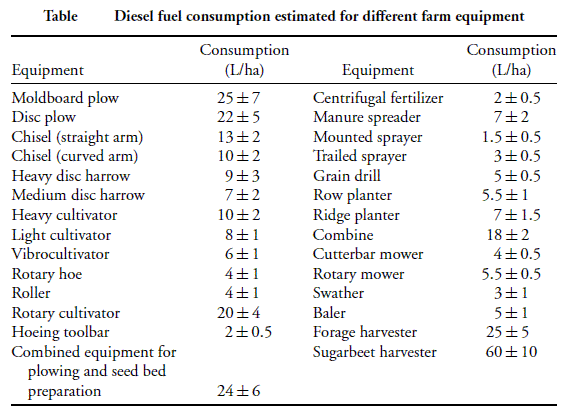
Indirect-use Energy
Although
approximately one-third of the energy consumed on the farm is for direct use,
nearly two-thirds of the energy is consumed indirectly. Indirect use refers to
the energy used to produce equipment and other materials that are used on the
farm. The major indirect use for energy is for fertilizers and primarily for
nitrogen fertilizers. Other important items are farm machinery and biocides. In
irrigated areas, irrigation equipment is relevant as well.
a. Farm Machinery.
The production and
the repair of farm machinery are important issues in the total energy balance.
We consider several steps in calculating this energy:
1) energy used in producing the raw materials (for example: steel, 22 - 60
MJ/kg);
2) quantity of energy required in the machinery manufacturing process; (27-55
MJ/kg)
3) transportation (placement) of the machine at the farm site (estimated ~9
MJ/kg);
4) energy sequestered in maintenance/repairs of machinery.
The total energy
sequestered in different types of farm machinery is given in Table:
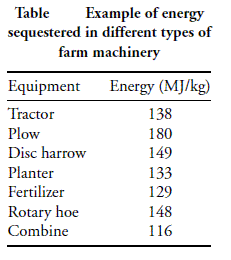
Mean value per kilogram and year for a group of tractors and agricultural
machines is given in Table:
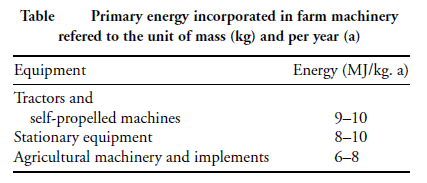
To evaluate the
energy input for machinery and equipment per hectare, it is necessary to know
the weight of the machinery used in the farm, its working life span, and the
average surface on which it is used annually. When we assign the energy values
for each and specific machinery used, it is possible to establish the energy
input for the farm machinery per hectare, having calculated previously the
average weight of machinery utilized per hectare and per year. For example, for
mechanized corn production, ~55 kg of equipment is used per hectare and year.
Factors Affecting Tractor
Efficiency
Tractors are the
most important machines in agriculture, and their performance is of the greatest
importance in achieving high efficiency in crop production (meaning a best
positive return on energy for the whole particular system including crop
production for biofuels).
Engines
The latest
developments in the diesel engines of tractors are related to:
- higher pressure of
the injection pumps (~1000 bar),
- integrated pump-nozzle units,
- electronic injection control,
- a broad introduction of turbo-charging and inter-cooling.
Unfortunately, the
turbocharger heats the air going into the engine. The heat reduces the density
of the air. Intercooling reduces the temperature of the air inlet in the
combustion chamber, which thereby increases the air density, which in turn
increases the power output. In some tractor turbocharged diesel engines, an
intercooler with a waterjacket coolant is used. Such an installation limits the
aftercooling to
~25oC
above the water-jacket temperature. Using air to cool the air from the
turbocharger is more effective in lowering the temperature; however, the size of
an air-cooled intercooler usually discourages its application for mobile
equipment.
The efficiency of
internal-combustion engines can be described by engine performance maps. These
maps show lines of equal specific fuel consumption and consequently constant
engine efficiency, within the diagram of torque/engine speed. They can be used
by tractor operators to control engines by use of microcomputers to achieve
optimal conditions of operation (power - torque - fuel consumption). For most
agricultural tractors, performance maps are available from OECD Tests Reports.
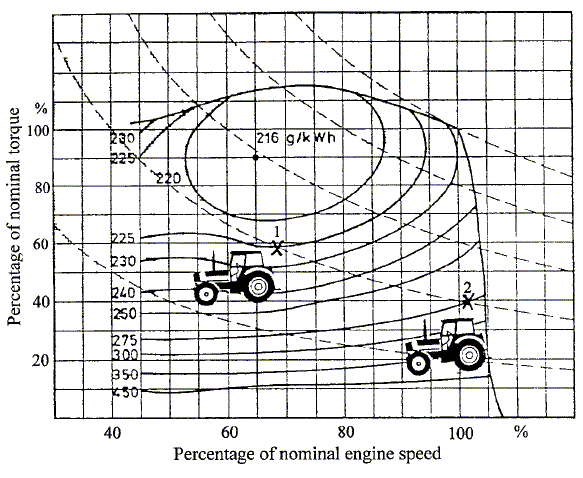
An example of
performance map above, shows a tractor that runs at the same speed with 40% of
maximum power in two different gears. At point 1 fuel consumption is 225 g/kWh
and at point 2, it is 275 g/kWh. If the tractor has a nominal power of 80 kW,
the fuel saved working at point 1 in relation to point 2 is
F = 0.4 x
80 x (275 - 225) = 1600 g/h
If we assume for
diesel fuel a density of 850 g/L, we find that
F = 1600/850 = 1.88
L/h
Therefore there is a
substantial fuel saving, when the proper gear is used to obtain the optimum
performance. In the above case, when the engine is run at a high speed (point
2), fuel consumption is greater than that at point 1 and also the life of the
engine is reduced.
Transmissions
In modern tractor
design there is a change from synchronized to power-shift transmissions. Power
shifting means changing from one gear ratio to another without the use of a
clutch or any interruption of power. Power-shift transmissions save energy,
allowing us to change gears without having to disengage the power coming from
the engine. Planetary gears are predominantly used in power-shift transmissions.
Recently, reverse gear for all speeds have been also introduced in medium-sized
tractors of 60 - 90 kW [Renius
1992].
Hydrostatic
transmissions are used in special agricultural equipment, but not so much in
standard tractors. In some designs, the hydraulic pump is separated from the
propulsion parts of engine. Therefore motors are located directly on the drive
wheels. Such arrangement allows for more flexibility in positioning the drive
wheels and also eliminates the need for a differential. The efficiency of
hydrostatic transmissions is low (50% - 70%) compared with mechanical
transmissions (85% - 95%).
Electric
transmissions may be found in large engines (machines). Although their
efficiency is high (95% - 98%), they do not improve the total effectiveness of
the whole internal combustion engine that runs on fossil fuel (such motors have
usually a low efficiency of 30% - 35%). The price of electric generators and
motors is quite high, and their weight is also considerable. Their advantages
are: precise steering and maintenance as well as safe operation.
Tires
The development of
radial tires having at a low inflation pressure reduces soil compaction. The
slippage is also substantially reduced for a given thrust torque, and
consequently less fuel consumption is achieved. To adapt the pressure of radial
tires to every work situation, it is necessary for the tractor to have a
compressor and a central tire inflation system to change the pressure of the
tires when necessary.
A substantial number
of evaluations have been made that compare the performance of bias and radial
agricultural tires on both two-wheel- and four-wheel-drive tractors. Significant
performance improvements (wheel slip reduction of 6% - 7%, torque power increase
of 10% - 12%, and fuel savings of up to 20%) have been achieved in both types of
tractors when radial tires at low inflation pressures are used instead of bias
tires [Stout 1992].
General
Considerations in Tractor Operations
Several
recommendations to achieve greater efficiency in tractor applications are
considered [Kutzbach 1989]:
a. For Heavy
Traction Works.
- The axles of the tractor should be ballasted with different weights and
the tires should also filled with water in such a way that the soil is not
compacted.
- The tractors should be in the four-wheel traction mode.
- The gear should be chosen in such a way that the real work speed will be
as high as possible.
- The depth of plowing should be established in such a way that the wheels
slippage ’S’ is within 10% - 15% range.
The slippage is calculated by the formula:
S = 1 -
va / vt
where:
-
S is the wheel slip,
-
va
is the actual travel speed, and
-
vt is the theoretical wheel speed.
b. For Light
Traction Works in the Field.
- Reduce the weight of the tractor to avoid formation of tracks in the ground.
- The wheels should be big and wide or use twin wheels.
- Apply low pressure in the tires.
- Maintain ‘S’ not bigger than 10%.
c. For jobs done
with mounted machines (fertilizer spreaders, sowing machines, or sprayers):
- The weight of the machine and that of the tractor should be maintained as low
as possible to reduce rolling resistance.
- Narrow wheels, if used, should have diameter as big as possible and low
pressure.
- Always try to drive in the same track to affect only a small percentage of the
soil surface.
d. For transport
work:
- Set up high pressure on the tires to reduce rolling resistance (it is
advantageous to have a air compressor for tires mounted on the tractor).
- Disconnect the four-wheel drive. Use it only for special heavy traction (as in
a big slope).
In general, it is
important to attune the combination of tractor and tillage machine/equipment
being dragged. When the machine is too small for a tractor, much fuel is
unnecessarily wasted.
Energy Saving in Tillage
Systems
Tillage may be
defined as a modification of soil structure due to the mechanical work of
tillage equipment. This work involves large amounts of energy necessary to cut,
break down, flap soil layers, reduce clod size, rearrange aggregates, etc. The
main objective of tillage is to obtain the best soil conditions for growing
crop. These conditions differ from site to site, depending on soil and weather
conditions. Any actions on and treatment of soil require direct use of energy,
mainly fuel. The energy is conducted from the engine to the tillage equipment
through several components of the whole system, in which important losses can be
expected.
Overall efficiency
(OE) in the use of fuel energy is the result of multiplying partial efficiencies
at different steps (engine, transmissions, wheels, and implement):
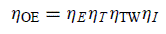
where
 |
is the engine
efficiency (0.3- 0.4),
|
 |
is the transmission efficiency (0.8 - 0.9), |
 |
is the tractive wheel efficiency (0.5 - 0.7), and |
 |
is the implement efficiency (0.4 - 0.8). |
These values allow
calculation of the overall efficiency ranging from 2.5% to 10%, depending on
ground properties. In many cases, tillage preparation needs at least two or
three steps so that overall efficiency is close to 1%, according to Chancellor [Chancellor
1982]. Overall efficiency
in all operations may be stated as a relationship between the energy directly
applied on the soil in the laboratory to obtain a desired particle size, and the
energy of the fuel required in the field for obtaining the same effect [Hakansson
1995].
Tillage and Soil Compaction
An important
objective for tillage is to reduce soil compaction resulting from natural
factors (rain, swelling - shrinkage processes, etc.) and human activity like
vehicles’ traffic. Severe soil compaction reduces both air and water
permeability, root penetration, nutrient uptake, and crop yield; on the other
hand, it increases serious environmental problems such as soil degradation and
loss of bio-genes. Soil compaction increases energy consumption in tillage
operations for two main reasons:
- The specific
draft force increases in the same proportion as the bulk density at the same
soil moisture content, and higher tractor slippage can be expected.
- If the soil is cloddy after primary tillage, secondary field passes are
necessary to achieve the appropriate size and distribution of the soil
aggregates.
There are several ways to reduce these constraints [Hakansson
1995]:
- Carry out tillage
operations at the optimum soil moisture content.
- Use high capacity four-wheel-drive tractors and tillage equipment.
- Improve the organization and planning of transport operations taking place
across the field;
- Reduce traffic as much as possible.
- Reduce the tire pressure.
Conventional Tillage
Conventional tillage
may be defined as traditional practices carried out in seed-bed preparation. In
most cases, it is associated with the use of a moldboard plough or a disk plough
for primary tillage. Both types invert soil layers to bury crop residues, weeds,
fertilizers, and loose soil to increase its porosity. Heavy disk harrows, chisel
plough and heavy cultivators also can be considered for primary tillage. Depth
of tillage varies according to the tool (machine), soil type, weather
conditions, and crop requirements. With moldboard and disk plows, it ranges from
20 to 35 cm and even more; with chiseling plow and cultivating, penetrates are
~20 cm, and with disk harrowing up to 15 cm. Secondary tillage is required for
creating optimum soil conditions for sowing and advanced germination. Machines
commonly used are light cultivators, vibrating cultivators, light harrows,
rollers, etc., and powered one like rotary tillers, oscillating harrows, rotary
harrows, etc. In any case, required seed-bed layer should reach depth of 10 or
12 cm on a average.
Two main factors affect energy consumption in tillage practices [Srivastava
1993]:
a. Soil Type andTillage Conditions.
The soil moisture
content has a big influence on soil mechanical properties like cohesion,
friction, and adhesion. Clayey soils are cohesive, and this variable is strongly
conditioned by moisture content. Under dry conditions cohesion can reach values
up to ten times higher than that under wet conditions, so that the specific
draft force increases in the same proportion. On the other hand, heavy, wet
tilth tends to be cloddy; more energy is required for breaking up clods into
fine aggregates. Under wet conditions soil is sticky and the adhesion forces are
predominant, making the earth work difficult. Sandy soils have low cohesion and
high friction, so the moisture content does not have a significant influence on
the specific draft force. The optimum moisture content of most soils should be
close to its plasticity limit.
b. Implements.
Energy consumption
is related to the working action of tools. For primary tillage, moldboard
plowing requires more energy than chiseling. Both systems mean two different
ways to produce soil breakup. By plowing, soil is cut, lifted, turned, and
projected onto a side furrow. The specific draft force depends on the moldboard
type, the travel speed, the soil bulk density, and moisture content. By
chiseling, soil is pushed forward and laterally to produce its breakup. This
machine requires ~30% - 40% of the energy required by the moldboard plow under
the same tillage conditions. For secondary tillage, non-powered tools require
less energy than powered ones, but also require more field operations for
obtaining the same size of aggregates. Powered machines need extra energy to
propel their own tools (sometimes more than one implementation) that are dragged
behind, but they work more efficiently. One run is often enough for full soil
preparation. Table shows specific work for the main tillage implements.
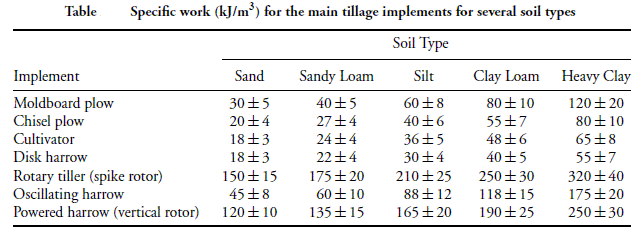
Minimum Tillage
Minimum tillage
means either the reduction of the depth in tillage or the number of field
operations. For primary tillage, chisels, cultivators, and disk harrows are
commonly used. Minimum tillage would mean reducing energy consumption by ~50%,
if we take into account that deep tillage reaches down to 15 or 20 cm. In some
cases of minimum tillage, weeds are not accurately controlled, so a herbicide
might be necessary.
Secondary tillage is
carried out with the same implements. Seed-bed preparation may be achieved in
one or two passes in which a combination of chisel, powered implement, roller
and drill, or planter is frequently used, mainly in humid regions when time for
sowing is short. Minimum tillage can be included in the conservation tillage
systems on the condition that a minimum of 30% of soil surface should stand
covered with crop residues after seeding.
Mulch Tillage
For areas where
erosion is a problem, mulch tillage is an accurate practice for its prevention;
therefore this technique is included in conservation tillage systems [Perdok
1983]. Soil is loosened down to
10 or 13 cm in most cases by chisels, cultivators, harrows, and Vsweep
implements. The latter provides good weed control. Other implements also used
are rod weeders and stubble treaders. If soil presents compaction problems, a
deep loosener (paraplow) is used to increase macroporosity and water
infiltration. With mulch tillage, a minimum of 33% of the previous crop residues
is left on the soil surface.
Strip Tillage
Strip tillage
creates flat or ridged rows, eight to ten inches wide.Crop residues from
previous harvesting cover 50% of the undisturbed, weed-suppressed soil surface.
This type of tillage, performed with special equipment (sweeps, disc harrow,
rotary tiller, can require the farmer to make multiple trips, depending on the
strip-till implement used, and field conditions. The disk opener of the planting
unit slices the soil and the seed is dropped into the furrow that has been
created and then a press wheel closes the furrow.
No Tillage
No tillage is also
called direct planting or zero tillage. The soil is disturbed in only a narrow
bands ~3–8 cm wide, by the openers of seeders, mainly coulters and disks.
Herbicides are applied before seeding. This system saves plenty of energy
compared with the other systems mentioned, but it is not possible to apply it in
all cases. Good natural soil drainage is the first condition required. On the
other hand, weeds and pests, must be controlled as soon as possible; otherwise
they will seriously limit the success. Large amounts of crop residues on the
soil surface should have been previously accurately treated (chopping,
spreading, etc.). Both drills and planters in direct drilling or planting need
additional weight because the soil has not been previously loosened by tillage
implements. In humid areas, where high rates of crop residues can be expected,
soil disk openers are frequently used. In dry regions, with hard soils and low
crop residue content, hoe (knife) openers allow a good seeding and are lighter
than disk openers. After seeding, ~70%–90% of the soil surface is covered with
previous crop residues. Table shows overall energy consumption per hectare for
different tillage systems.
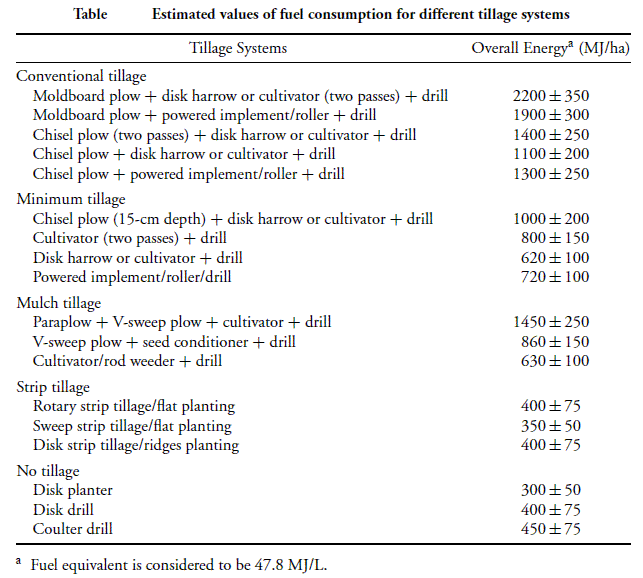
b. Fertilizers.
Fertilizers are
chemicals being incorporated into the soil or directly on top of the soil, for
the nutrition and normal growth of the plants. Crop plants take up nutrients at
different rates, so nutrients have to be incorporated into the soil to maintain
its productive potential. The process involved is known as fertilization. Plants
build their cells using 15 major elements. Oxygen, hydrogen, and carbon form 90%
- 92% of the plants' weight. The other elements can be classified into three
groups:
-
Primary nutrients
(nitrogen, phosphorus, and potassium).
-
Secondary nutrients
(calcium, magnesium, and sulfur).
-
Micronutrients
(copper, iron, manganese, molybdenum, boron, and zinc).
According to the
source, fertilizers are divided into three categories:
-
Chemical: These are
manufactured from the air to obtain nitrogen fertilizers and also from
geological material to obtain phosphate and potash fertilizers.
-
Organic: These are
obtained from crop residues animal farm wastes.
-
Biological: These
are related to nitrogen uptake by micro-organisms placed in the cells of the
roots of legume crops.
Chemical fertilizers
are widely used in agricultural crops and require high rates of direct energy
for their production, mainly in the nitrogen fertilizer industry. Ammonia is the
basic source for commercial nitrogen fertilizers; it is produced by the
synthesis of hydrogen with atmospheric nitrogen under high-pressure conditions.
The chemical processes need natural gas both to heat steam and to react with
water to obtain hydrogen at temperatures ranging between 400 and 1200oC during
certain stages of production [Mudahar
1987]. Mined phosphate is the
source of all phosphate fertilizers. This raw material can be applied directly
after being processed (drying, grinding, etc). Most commercial phosphate
fertilizers come from phosphoric acid. The latter is obtained by treatment of
phosphate rock with sulfuric acid. The basic material for potash fertilizer
products is potassium salt. The extraction can be performed by mining or by
solar evaporation, when the raw material comes from lake beds. Average energy
used for production of active constituent (kg) in most important chemical
fertilizers:
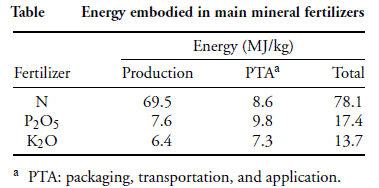
Overall energy
consumed by production of particular fertilizer includes production, packaging,
transportation, and application. For mixed fertilizers, it is necessary to add
1.14 MJ/kg for conversion to liquid form.
Organic residues
contain different degrees of nitrogen, phosphorus, and potassium, depending on
the origin of the material and the method of processing and storage. In this
case calculation for absorbed energy is based on percentage of the active
component in a dry weight of fertilizer. Energy intensities for production of
minerals like nitrogen, phosphorus, and potassium is roughly: 70, 8, and 6
MJ/kg, respectively.
Fertilizer
Management
Both the fuel and
the mineral fertilizers require the highest amounts of energy compared with the
other inputs in crop production. Accurate fertilizer management can improve
energy use, mainly if we refer to nitrogen. This nutrient has two important
characteristics: the high energy content incorporated during manufacture and its
ability to be quickly washed out by water. It is recommendable to increase crops
profitability and reduce fertilizer losses by introducing management practices.
Fertilizing Rates
In most cases, a
continual assessment of soil nutrient levels allows us to knowwhat the optimum
rates to be applied are. Experimentswith different fertilizer rates lead us to
make certain recomendations to the farmers to attain the greatest efficiency.
From the energetic point of view, the procedure is similar to the economic
evaluation.
Crop yield can be characterized as a function y
= f (x), quadratic
or exponential, of the nutrient supply x.
The most profitable application rate of a fertilizer is the optimum energetic
rate, which, by definition, occurs when the energy involved in the last
increment applied equals the value of the last additional yield that resulted
from an increment of fertilizer [Fox 1986].
To obtain this rate it is necessary to solve
d[(Ec / E
f ) y] / dx = 1
where
-
y is the crop yield (in kg . ha-1),
-
x is the fertilizer rate supply (in MJ . ha-1),
- Ec
is the gross energy intensity of the crop (in MJ . kg-1),
and
- Ef is the energy intensity of the fertilizer (in MJ .
kg-1).
This procedure
allows us to establish comparisons among different management practices for any
crop with the same soil and weather conditions when a specific nutrient is
considered as a limiting factor.
Loss Reduction
Fertilizer loss
influences crop yield and create economic and environmental problems such as
contamination of ground waters, aquifers, lakes and rivers. Nitro-fertilizers
are the most difficult to control - they become volatile producing gases as NO2,
N2, NH3. The main processes involved in nitrogen losses are Soil erosion,
leaching, denitrification, and ammonification can be expected. [Soane
1995], showed that for every 100
kg/ha of nitrogen applied in the USA, 50% is consumed by harvested crop, 25% is
leached and ends up in ground waters, 5% is lost by run-off to rivers/lakes, and
20% is lost in primary denitrification.
Table shows the
influence of some factors in the different processes in which nitrogen is lost.
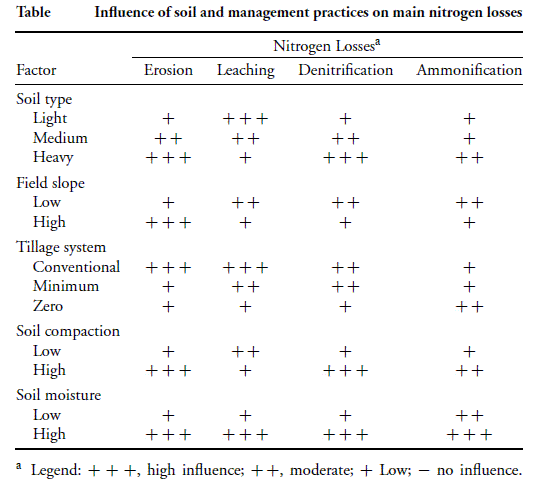
Reducing losses can
be achieved by accurate fertilizer management if the following aspects are
considered [Buchholz 1987]:
a. Fertilizer
Location.
In many cases, fertilizers are distributed throughout the vast area application.
Shortage of fertilizer can be quickly addressed in such case. Rotary spreaders
distribute fertilizers more than 24 m wide. In this case the control of the
fertilizer is obtained by avoiding its overlaps'-the most important factor in
getting a uniform distribution. Drop-type and pneumatic equipment can be used
for spreading fertilizer on top of the soil or for undersurface placement. They
cover smaller bands of the ground than rotary spreaders, but provide greater
uniformity of coverage. In conservation tillage systems, important amounts of
nitrogen are conserved by crop residues on soil surface. Sideband applications
in which nutrients are located close to, at the side of, or below the seed
increase the chances that the roots of the plants absorb the fertilizer.
Efficiency is increased because losses are reduced. This method is successfully
used in no-tillage systems where seeding and fertilizing are carried out in one
operation with combined equipment.
b. Fertilization
Timing.
Majority of losses can be avoided if fertilizer is applied in several sessions,
especially in humid areas where leaching is a serious problem. Fertilizer is
more efficient when it is supplied just before the time of fertilizer's greatest
plant consumption.
c. Crop Rotation
with Legumes.
Legumes posses large capacity for increasing the nitrogen level of soil. This
happens due to their roots symbionts able to trap and hold nitrogen.
Consequently a reduction in fertilizer/mineral rates and lower energy in crop
production are attained. For alfalfa, fixed nitrogen can be higher than 200
kg/ha; for clover, it ranges from 115 to 200 kg/ha; for vetch, 80 to 100 kg/ha;
for peas, 70 to 80 kg/ha; for beans, 60 to 90 kg/ha; for soybean, 50 to 100
kg/ha, etc.
c. Chemical
Biocides.
During
the past 50 years, chemical biocide consumption in the world has increased
substantially. Most farmers need them every year to control weeds, pests, and
diseases. Biocides act faster than any non-chemical control systems.
Biotechnology provides new products all the time, that when applied in low
amounts, allow control of weeds, pests, and diseases more efficiently. The
energy spent (embodied) in active ingredient production includes manufacturing,
formulation, and packaging (shown in Table):
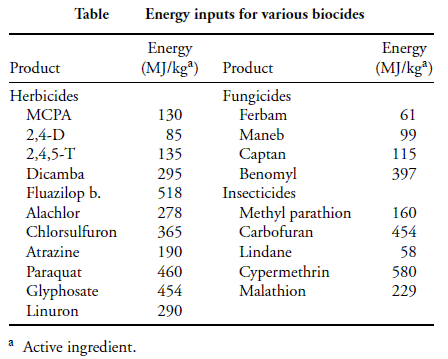
To establish total
spent energy, it is necessary to add transportation and application for
particular biocide [Green
1987]. An active ingredient
requires both direct and indirect energy for its formulation. Direct energy
includes fuel, electricity, and steam to synthesize the biocide’s active organic
compounds. Indirect energy comprises the amount of crude oil or natural gas to
produce ethylene, propylene, or methane that will be transformed into the
organic products mentioned above. The active ingredient must be formulated as
emulsion oil, powders, or granules. Energy for formulation is 20, 30, and 20
MJ/kg, respectively. Packing and distributing formulated biocide require
additional energy, ranging from 3 to 8 MJ/kg, depending mainly on the distance:
formulator to distribution. Application includes both direct energy for
tractor’s diesel fuel and indirect energy used by the equipment (for example:
sprayer) and the tractor during the time of application.
Biocide Management
In modern crop
production it would be difficult to attain a high yields if weeds, pests, and
disease were not controlled. The overall energy required in crop protection is
lower than other inputs, although it is of great significance. Energy reduction
is not the main factor here, because environmental and economic considerations
are more important. To reduce the negative effects of weeds and parasites,
different and complementary strategies, such as preventive, physical, cultural,
biological, and chemical ones, must be considered [Barrett
1987].
Weed Control
Strategies
Weeds compete with
the crop plants for light, water, and nutrients. Weeds control in earlier stages
of growth, or even before their emergence, is of prime importance. This will
save money and energy, and reduce the environmental impact. For weed control,
several methods must be considered.
a. Preventive Weed
Control.
These practices permit farmers to avoid further problems of weed infestation. At
the time of sowing, weed seeds must be separated from crop seeds by accurate
cleaners. Although certified seed is more expensive than seed recovered from a
previous crop or from another farm, the risk of infestation is greatly reduced
with the former. Another important aspect is keeping field borders free of
weeds.
b. PhysicalWeed
Control.
Mechanical weed control is the oldest system used by growers. In primary
cultivation, the moldboard plow is the most efficient implement for weed
control. Weeds are completely buried within the soil, mainly in humid climate
areas. Nevertheless, a high amount of energy is required for this type of deep
tillage. On the other hand, soil layer inversion improves the conditions of weed
seed germination when these seeds are located near the top of the soil.
Chiseling and cultivating are less efficient in weed control than the moldboard
plow because the weeds are only partially buried. To improve their control,
V-sweep tools are mounted on the shanks and in many cases even a rod weeder is
attached behind the implement. An interrow cultivator is efficient and easy to
manage. Its energy consumption is low and allows for weed control for most of
the growing season, depending of the crop type. Perennial weeds present serious
problems when controlled by tillage, especially rhizomes. Some mechanical
practices such as disking may disperse rhizomes within the soil. Another
physical manner of weed control is burning them by propane combustion close to
the crop plants. This system is expensive, requires a high amount of energy
(150–200 kg/ha of propane) at the speed of only ~1 to 2 km/h, and weed control
is low. Today this method does not seem appropriate for most of the crops.
c. Non-chemical
(cultural) Weed Control.
Cultural
practices can be classified into the following categories [Regnier
1990]:
- Competitive or
allelopathic crops. Each crop differs in its competition with weeds according to
its growth rate, spacing and the life cycle of seeds. For winter crops the
activity of weeds is reduced comparatively with that of spring and summer crops.
Even for the same type of seed (plant), the cultivars have a significant
influence on the competitiveness against weeds.
- Allelopathic crop
residues. Many mulch crops such as rye, wheat, oats, and barley contain
allelochemicals, which deter weed germination.
- Intercropping.
This management is often performed in the tropics. Two crops, such as soybean
and corn, are cultivated interchangeably at some point during their growing.
d. Biological Weed
Control.
A biological agent, normally a fungal, is released on a field to control annual
weeds before weeds cause losses in crop yield. These agents are called
mycoherbicides. Insects are also used as biological agents for weed control.
e. Chemical Weed
Control.
Since the beginning of their use 50 years ago, chemicals are the most widely
used products for weed control. Continuous research is being made, both to
improve their effectiveness with new active ingredients and to develop safe
application technologies. Nevertheless, environmental problems are arising as a
consequence of inappropriate application of these chemicals. To reduce the
quantity of active ingredients, it is necessary to act in earlier stages of weed
growth. If application is delayed, the rate of herbicide could be increased 100%
more in relation to the amount needed at the optimum time. To attain efficient
weed control, the following aspects must be considered:
- The best
concentrations in water for a market product, range from 1% to 2% for
conventional applications with sprayers.
- A flat nozzle is more accurate than a turbulence nozzle for herbicide
application.
- The operating liquid pressure is generally 100 to 250 kPa.
- Travel speed must be maintained constant throughout the treatment.
- Nozzles, when operating at the same pressure, should be rejected when the flow
rate per unit of time is 15% higher than the values specified by the
manufacturer.
- Screen protectors against air drift allow an increase in the effectiveness of
control (placement of herbicide within the desired area)..
Pest and Disease
Control
As stated for weed
control, pest and disease control practices follow similar trends for
improvement. The term ‘integrated pest management’ is defined as “A strategy of
pest containment that seeks to maximize the effectiveness of biological and
cultural control factors, utilizing chemical controls only as needed and with a
minimum of environmental disturbance.” This means that different strategies are
involved with the objective of chemical usage reduction [Luna
1990].
a. Cultural Control.
Cultural control involves management systems in which the pest's life cycle is
the primarily target. By conventional tillage, many insects are buried into the
soil, breaking down their natural cycle. This can also be achieved by straw
burning, but in this case, ecological disadvantages predominate over benefits.
Crop rotation also allows some control of pests and diseases but its efficiency
is limited for mobile insects and pathogenic spores; it is more accurate on
rootworms and wireworms.
b. Biological
Control.
Many species exert a natural control on insects, pathogens, and weeds. This
creates trophic linkages that maintain the crop injury level below the economic
threshold. Chemicals, in many cases, have a negative influence because they
break down/destroy vital for many species ecosystems. For well executed
biological control, knowledge of the different species and ecology is important.
c. Biotechnological
Control.
In recent years, biotechnology has promoted the development of new resistance
mechanisms in crops by genetic engineering. We are still in an early stage and
more practical experiments are pending. Maybe in the near future this will be a
powerful tool for pest and disease control.
d. Crop Propagation.
Agricultural crops
can be propagated through seeds, bulbs, tubers, etc. The energy required for
their production must be taken under consideration. For example, grain seed
requires different energy rates, depending on whether it is produced on the
farmer's own farm or purchased from a seed producer company. Values for energy
costs for different seeds used in crop production are shown in Table:
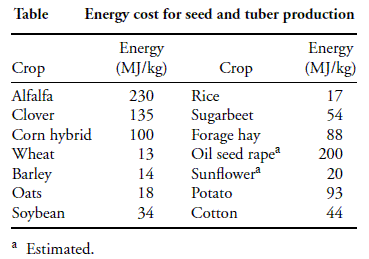
e. Irrigation.
Water is essential,
but unfortunately there are many areas where this element is limited. Increasing
need to produce food to nourish the world population, forces people to plant and
grow crops where hydraulic resources are at the far distance, hard to obtain or
scarce. This objective requires infrastructures and energy for storing, pumping
and transporting large amounts of water to agricultural farms. Energy assessment
in irrigation systems depends on both the direct use (DE) and the indirect use
(IE). The former includes the energy consumption to lift or pressurize (H) the
overall rate of water required by crop considered per hectare.
Direct energy can be
expressed by the following equation:

where
| DE |
is direct-use energy (in joules per hectare),
|
 |
is the water density (1000
kg/m3),
|
| g |
is gravity (9.8 m/s2),
|
| H |
is the total dynamic head, including friction losses (in meters),
|
| Q |
overall rate of
water, including losses by evaporation, run-off, etc. (m3 . ha-1),
|
 |
is the pump efficiency, and |
 |
is the overall
efficiency of the power device, electric or diesel.
|
Pump efficiency is a
function of vertical height to lift (required pressure), rotation speed, and
water flow. It ranges between 70% and 90%. Overall efficiency is considered for
both electric- and fuel-powered devices; it ranges between 18% and 22%. For the
electric motor, the generating plant, the transmission line, and the motor
efficiency are included. Diesel efficiency is approximately 25% - 30%, but the
energy to produce and transport fuel must also be considered [Ortiz-Canavate
1994]. Indirect energy includes
raw materials, manufacturing, and transportation of the different elements.
Estimation is based on the similar irrigation systems that have approximately
the same expected functionality life time for particular type of crop. There are
many irrigation systems, therefore it is difficult to establish the exact value
for indirect energy. The following examples show relation between IE and dE: for
the traveling sprinkler system IE equals about 18% of DE; for the surface
irrigation systems with a run-off recovery , IE equals about 37% of DE [Fluck
1982].
Power Unit
Efficiency in Pumps
In diesel engines,
both torque and speed (rpm) have to be regulated to obtain the lowest specific
fuel consumption. In most engines the speed is nearly 60%–75% of its maximum
value and the torque is 75%–80% of its maximum. When the unit pump engine is
selected, the optimum speed of the pump must be known in order to achieve the
best transmission between pump and engine.
For electric-powered
units, efficiency depends on the generating plant, for which thermal (coal)
energy presents an average efficiency of 20%, nuclear 25%, and hydroelectric
50%. Losses in electric transmission lines are 15% and efficiency in converting
electric to mechanical power can reach 90%.
Pumps’
Efficiency
Depending on the
pump type and its performance, there are different efficiencies. In low- to
medium-capacity centrifugal pumps, efficiency ranges from 50% to 80%. These are
used by individual farmers. In high-volume propeller, mixed-flow, and turbine
pumps, for which the discharge rate is higher than 500 m3/h,
efficiency can be up to 90%. These kinds of pumps are normally operated to
supply water to several farms.
Distribution of Water/Irrigation
Large amounts of
water can be lost if infrastructures are not maintained in good condition. These
losses are seepage, evaporation, and spillage. Efficiency ranges from 50% to
98%. The highest values are for drip irrigation.
Irrigation Systems
The irrigation
gravity systems present the lowest efficiency, mainly because of leakages from
water channels. Losses can reach up to 80%. For sprinkler stems, efficiency
ranges from 50% to 80% (the lowest value refers to big gun equipment). The most
efficient systems are drip and trickle irrigation, for which an efficiency of up
to 90% can be obtained. These last systems allow farmers to incorporate
nutrients into the water so its effectiveness is also improved.
f. Transportation.
Agriculture is
basically a transportation industry. Energy is required for moving inputs to the
farm from their point of origin, for moving labor, machinery, and products to
and on the farm, and for moving farm products to market. Energy requirements in
transport are normally expressed as energy intensity, meaning the energy needed
per unit of weight and per unit of distance traveled (in MJ . t-1
. km-1). In agriculture, transportation
is done mainly by trucks or tractors and trailers. In developed countries,
approximately one half of the energy consumed in the food system goes to
transportation, marketing, and household preparation. In general, extra energy
required for transportation of agricultural commodities (even if the distance is
several thousand kilometers), does not make local greenhouse production more
economical [Fluck
1982].
Table lists the
energy intensities for different transport modes that can be used to transport
agricultural products.
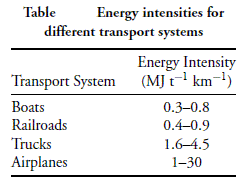
Some measures to
save energy in agricultural transportation could be:
- The choice
and the purchase of the most economical vehicles for the load to be carried and
with the minimum fuel consumption.
- Proper maintenance of trucks, tractors, and trailers.
- Good driving habits.
- Good planning to reduce trips.
Vehicle loading is
an important factor for efficient energy use. Loading the vehicle up to its
maximum capacity reduces energy intensiveness. This is also important in
relation to energy saving in transport: the use of concentrated fertilizers and
pesticides, the removal of moisture from commodities, and the processing of
commodities on the farm to eliminate residues that do not have to be
transported.
g. Labor.
Energy in labor is
expended by agricultural workers when processes are being carried out. There are
several methods to assess this input, which are based on different criteria. For
primitive agricultural systems, the most accurate method is directly related to
partial or total metabolic energy of the food consumed. In the mechanized
agriculture of developed countries, the caloric energy of food is insufficient
to be considered only.
Indirect energy
involved in all the food industry processes should be considered/added. Both
direct and indirect energy in this last case are higher than metabolic energy.
Estimation for the muscular energy and energy sequestered in food, ranges from 1
to 93.2MJ/day, and the energy required for maintaining agricultural laborers’
activities: 510 - 1450 MJ/day.
h. Harvesting
Effective harvesting
is a bigger energy saver. The efficient use of harvesting equipment is
associated with the application of global position system (GPS) techniques and
the timeliness of the operation. The global position system, or more accurately,
the differential global position system (DGPS), uses satellite navigation with a
fixed reference point located near where the machine operates. It can locate the
machine in the field with a precision of a few centimeters. For cereal
harvesting, the grain collected by the combine is registered by a continuous
weight sensor, and consequently a yield map can be obtained. This map gives
information for optimizing the inputs that have to be set next year: seed,
fertilizer, and pesticide. In this way, much energy can be saved while
maintaining the minimum cost in crop production. It is recommended that this
method should be applied to any crop.
According to the
ASAE [ASAE 1996],
timeliness can be defined as the ability to perform an activity at such a time
when quality and quantity of product are optimized. Energy productivity may be
substantially increased by an improvement in timeliness. Yields are increased
with better timeliness for different crop operations, including harvesting.
Losses of timeliness can be calculated by
L(kg/ha) = KDY/Z = l
Y (kg/ha)
where
K is defined as the timeliness coefficient (per day),
D is the number of days within the time span in which the operation should be
accomplished,
Y is the yield per area (in kg . ha-1),
l is the coefficient of losses related to unity (adimensional), and
Z is a factor (adimensional) that is equal to 4 if the operation can be balanced
evenly at approximately the optimum time and equal to 2 if the operation either
commences or terminates at the optimum time.
Values of
K have to be
determined for each crop in a specific location. Table gives information about
values of K
in different places derived from crop research reports.
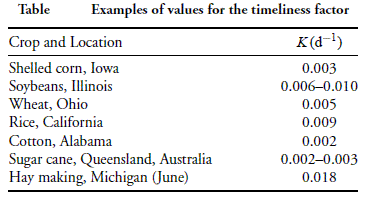
For example, if rice
is harvested in California during
D = 25
days starting at the optimum day (e.g., 20 September; therefore
Z =
2), losses produced for the operation duration are
l = KD/Z = 0.009 x
25/2 = 0.113 = 11:3%
To adapt the size of
machines to the amount of surface cultivated, early, medium, and late varieties
of crops should be programmed in such a way that they can be planted and
harvested, one after the other, at their optimum or the most near-optimum date
to reduce timeliness losses.
Energy Balance
Let us consider as
an example the sugar beet crop, which produces bioethanol (see Table).
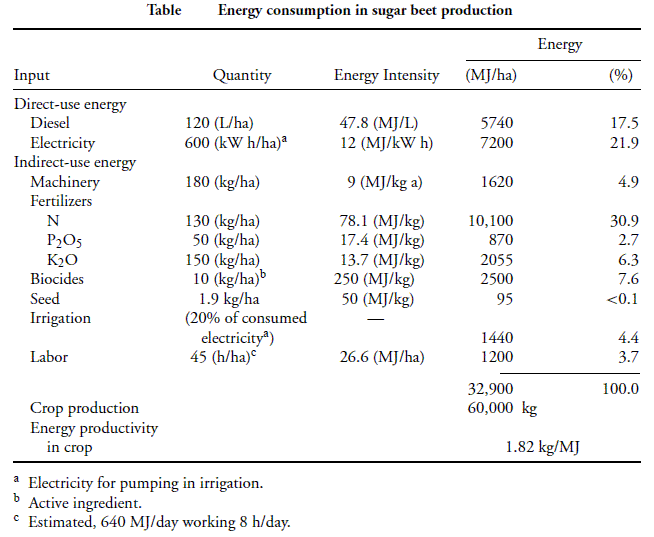
Figure below shows
the mass and the energy balance per hectare of sugar beet [Ortiz-Canavate
1994].
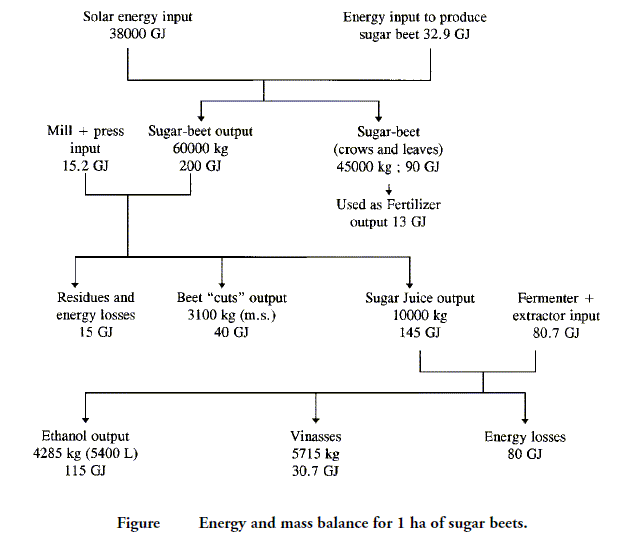
Considering ethanol
as a main product, beet cuts as fodder for animals, and crowns and leaves for
organic fertilizer as useful outputs, the balance will take a form
NEG = (115+40+13) - (32.9+15.2+ 80.7) = 168
- 128.8 = 39.2 GJ/ha
and
ER = 168/128.8 = 1.3
If we consider
ethanol as the main product, then productivity
EP = (5400 L/ha)/(128.8 GJ/ha) = 41.9
(L/GJ)
Therefore bioethanol
derived from sugar beet can be considered as a possible biofuel source, taking
into account that the energy balance of this crop is positive.
|
|
|
Economies of Bioenergetics
A variety of factors
were found to contribute to the cost data will include both the capital and
installation costs associated to the installation of actual capacity for
generation, typically provided in $/W(capacity), and the production cost, which
is the cost of producing electricity over the lifetime of a given project,
typically provided in $/kWh. The main factors that affect these costs include:
- Feasibility Study
Costs;
- Economies of Scale;
- Equipment/technology Options;
- Installation Requirements and Site Characteristics;
- Financing Terms;
- Cost of Land;
- Impact Assessment and Permitting;
- Project Renewable Resource Characteristics and Capacity Factors;
- Operating and Maintenance costs;
- Fuel Costs;
- Property Taxation and Land Lease Costs;
- Co-products and Co-benefits;
- Transmission and Grid Connection Costs; and
- Government Policy Factors
Factors that directly
affect the cost of electricity are factors that have a direct impact on the
capital cost of a project (and as such the installed capacity cost and
generating cost of a project) or the factors that have a direct impact on the
operating cost of a project (and consequently the generating cost only). Factors
that indirectly affect the cost of renewable electricity are generally policy
factors that lead to a reduction of the effective cost of various elements of a
project. The particularly significant cost variation over time associated with
some renewable electricity technologies was found to be the result of increased
commercialization and maturity of markets for these technologies in recent
years.
In principal, there are
considered to be two generations of commercialized renewable electricity
technologies if we consider technology development over the last 120 years.
First generation technologies emerged from the industrial revolution at the end
of the 19th century and include hydropower, biomass combustion and geothermal
plants. Biomass combustion technologies generally use steam turbines to generate
electricity. For smaller scale applications, internal combustion engines are
used to generate electricity from biomass. Steam turbine and internal combustion
engines are very mature. Hence, capital costs and electricity generating costs
for these technologies have not changed significantly with reference to other
conventional fossil fuel and nuclear based platforms over the years.
Therefore, unlike
photovoltaics and wind turbines, the costs of biomass combustion are not on a
steep technology-driven downward curve due to their technical maturity. Advanced
biofuels are considered to be a part of the second generation renewable
technologies. Second generation technologies are only recently starting to be
broadly commercialized as a result of research, development and demonstration
efforts which started in the late seventies. The initial investment in these
technologies was prompted by energy security concerns linked to the oil price
crises of that time period, but the continued focus on these technologies was
mainly due to their potential environmental benefits. Innovations and ramp-up to
commercialization for these two second generation technologies has led to a
major decrease in associated installed capacity and generating costs over the
past 3 decades.
Terminology
Before proceeding to
the analysis of cost data for bioenergetics and the factors that influence them,
several terminology clarifications are appropriate. These include the definition
of capital costs, fixed costs, variable costs, installed capacity cost ICC and
electricity generating cost EGC.
Capital Costs
Capital costs are costs
incurred on the purchase of land and equipment and installation and construction
services to be used to reach the point of producing goods, in this case
renewable electricity. Capital cost also include feasibility studies, project
design, permitting and legal costs incurred to reach the point of initial
production. In other words, capital costs represent the total cost needed to
bring a project to a commercially operable status.
Capital costs do not
include labor costs except for the labor used for feasibility analysis, project
design and construction. Typically, capital costs are one-time expenses,
although payment may be spread out over many years depending on financing
arrangements. Capital costs are generally fixed for a given unit of installed
electricity generating capacity (i.e., they don’t change over the lifetime of
the project), although they do vary from project to project based on equipment
configurations and project site specifics. Capital costs also do not vary
depending on the actual level of electricity output occurring from a project.
Operating and Maintenance
Costs
Operating costs are the
recurring expenses which are related to the operation of a business. It is the
amount of resources used or cost incurred by an organization just to maintain
existence. These costs include overhead costs, which can include the payment of
rent on the office space a business occupies or lease for land on which a
generating plant is sited, administrative employee wages, insurance costs,
financing costs such as interest or other financing charges, taxes, equipment
depreciation etc. They also include non-overhead costs like supplies, such as
biomass feedstocks used to create the electricity, and in some cases employee
wages.
Operating costs
generally fall into two broad categories:
- Fixed costs, which
are the same whether the operation is closed, or running at 100% of capacity.
Fixed costs are expenses whose total does not change in proportion to the
activity of a business, within the relevant time period or scale of production.
Fixed costs include, but are not limited to, overheads (rent, insurance, and
such) and can include direct costs such as payroll (particularly salaries).
- Variable costs, which
may increase depending on whether more production is done, and how it is done.
For electricity projects, the most significant variable cost is typically the
cost of fuel.
Because bioenergetic
projects also entail the use of devices, components and pieces of equipment to
make up overall generating facilities, maintenance costs must also be
considered. Maintenance costs are incurred to keep equipment operating at an
optimal level of performance. These costs included those associated with routine
recurring work required to keep a facility (plant, building, structure, utility
system, or other real property) in such condition that it may be continuously
used, at its original or designed capacity and efficiency for its intended
purpose. These costs also include the corresponding administrative, managerial,
and supervision costs associated with this work. In the most simple production
function, total operating and maintenance cost is equal to fixed costs plus
variable costs plus maintenance costs
Installed Capacity Cost
ICC
The installed capacity
cost for a energy project is typically represented as dollars per unit of
installed power generating capacity ($/W). This cost is calculated by totaling
all capital costs incurred to bring the project to the point of production and
dividing this total by the total installed rated capacity of energy generating
equipment. The capital costs usually includes the following:
- Project feasibility
studies;
- Engineering design;
- Impact assessment and permitting;
- Equipment procurement of fabrication;
- Site preparation (including site services and access roads);
- Plant construction and installation;
- Grid connection;
- Project management; and
- Commissioning and start-up
Energy Generating Cost EGC
Each technology used to
produce electricity has specific characteristics which can vary significantly
from one to another. Among these characteristics: equipment cost, construction
time, electrical output, lifetime and operation and maintenance requirements.
Due to these differences it is very difficult to perform a comparison between
different technologies by only considering one of those characteristics.
Furthermore, comparison of installed capacity costs alone can be misleading as
some technologies have high initial capital costs but require very little
operating and maintenance expenditures over their lifetime while other
technologies demonstrate the reverse phenomenon. Fossil fuel plants, for
example, have some of the lowest up-front capital costs but incur significant
maintenance and fuel costs for the entire life of the plant. Conversely,
photovoltaic projects entail high up-front capital costs but require minimal
additional expenditures over their lifetime due to almost negligible operating
and maintenance requirements. In order to provide a better overall lifecycle
comparison between technologies, the electricity generating cost is a more
representative figure.
Levelized Cost of Power
LCP
The electricity
generating cost for a given project is frequently referred to as the levelized
cost of power production. It is typically presented in dollars per unit of
electricity produced ($/kWh). The levelized cost of power production is the
average cost of power production over the life of a power plant, taking into
account all capital expenses and operating and maintenance costs. It is
determined by dividing the total life-cycle costs, usually in present dollar
values, by the estimated amount of electricity, in kWh, the project will produce
over its operating life.
Feasibility Study Cost
Variability
Although feasibility
studies typically do not represent a major cost relative to other capital costs
associated with renewable electricity projects, they can be significant in some
instances. Feasibility study requirements, and consequently cost for such
studies, vary greatly from technology to technology. They can also vary
significantly between different projects using the same technology. For
renewable electricity projects, a significant factor affecting the cost
feasibility studies is the existence and quality renewable resource data for a
proposed project site. Where no data exists or where data is of limited quality
for a particular site, data must be collected and analyzed to the point of
establishing the viability of developing an actual electricity generation
project. The cost of acquiring reliable data depends on the renewable energy
resource and the technology being used to harness it. Requirements for
feasibility studies are typically fairly consistent from one biomass power
project to another. Furthermore, these costs are low compared to equipment and
construction costs.
Capacity/Economies of
Scale
All renewable
electricity technologies benefit from economies of scale in various ways.
Generally, the larger the installation the more power generation capacity there
is to amortize the various capital costs over. This means that these costs can
be more rapidly recouped with a larger capacity project, and consequently yield
a lower lifecycle cost for electricity generation ($/kWh) and a lower installed
capacity cost ($/kW). Furthermore, any project that has financial transaction
costs can recoup these costs faster if they are spread over more kilowatt-hours
with a larger project. This can also hold true with operating and maintenance
costs. A larger project will almost always have smaller operations and
maintenance costs per kilowatt-hour because of various cost efficiencies than
can be leveraged, such as management, maintenance equipment, monitoring etc.
Significant economies of scale exist for purchase of larger steam turbines or
combustion engines, so impacts on capacity costs can be significant. Impact on
electricity generation cost is lower because actual power production will depend
more heavily on the cost of biomass feedstocks over the lifetime of the biomass
power project.
Plant Availability
Plant availability,
along with the quality of the renewable resource dictate how much of the
installed capacity of a plant can actually be used and consequently how much
electricity can be produced from a plant assuming a constant supply of fuel. The
higher the availability of generating equipment, the more power can be produced.
The more power produced, the greater the potential revenues, or displacement of
cost of electricity from other sources, and the more rapidly capital and
operating and maintenance costs can be repaid.
Depending on the nature
of the biomass feedstock for a given electricity project, equipment costs can
vary significantly. For example some feedstocks may require chipping,
pelletizing, drying or long term storage for their effective use in combustion
equipment. Equipment for each of these activities represents a cost that may not
exist in other biomass electricity projects. Furthermore, where a suitable heat
load exists at a project site, an additional cost can be incurred to install
heat capture and transfer equipment, the cost of which may not always be
completely offset by displaced heating fuel costs. In addition to equipment cost
variations, characteristics of a renewable resource can affect technology
choices which also have an impact on the project capital cost per unit of
installed power capacity. For biomass projects these technology variations can
be significant.
The great variability
of bioenergy resources combined with the broad range of technical approaches to
harnessing bioenergy contributes to a great variation in biomass electricity
generating costs. Process routes for converting biomass into electricity include
direct combustion, gasification, anaerobic digestion and pyrolysis. Direct
combustion generally is a well established and relatively low cost technology
that involves burning biomass directly to produce heat to produce steam to drive
a turbine for electricity generation. Initial costs of a direct wood biomass
energy system are generally 50% greater than that of a fossil fuel system, but
this is mainly due to more complex fuel handling and storage system
requirements. Generally, the higher the plant availability, the higher the cost.
Although a cost premium may be justified over the lifetime of a project, it can
lead to a higher installed capacity cost. Equipment costs on an installed
capacity basis can vary significantly from one biomass conversion technology to
another.
Anaerobic digestion
involves decomposition of waste streams such as manure or municipal solid waste
in the absence of oxygen to produce a combustible gas similar to natural gas
which can be used to drive an a turbine or internal combustion engine generator.
Although the actual generating technologies used in such systems are well
established and have relatively low costs, manure handling and digesting
equipment can add a significant cost which can be offset by economies of scale
in larger projects.
Pyrolysis is a
thermo-chemical process used to convert solid biomass to liquid and solid fuels
that can be more easily stored, transported and burned than solid wood wastes.
Although not yet fully commercialized, these systems are used to convert biomass
streams in remote location or in locations where electricity is not required to
fuels that can be easily transported to sites where electricity generation can
be done using conventional turbine technology modified to use pyrolysis product
fuels in more commercially viable environments. Little cost data is available on
pyrolysis systems to date but they are only expected to be competitive in
applications where feedstock are free or have a negative value due to disposal
liabilities.
Finally, gasification
technologies convert forestry, agricultural and municipal residues into syngas
(similar to natural gas, but lower in energy content), which once cleaned and
conditioned, can be burned in gas turbines and gas-powered engines to produce
electricity. Although more expensive than direct combustion of biomass, these
systems can improve emissions performance. Each of these biomass technologies
represents different capital and operating and maintenance costs, but can be the
only economically competitive option depending on the biomass resource and
project location.
Cost of Land
Where land is not
leased, the cost of purchasing land on which electricity generating facilities
will be sited can vary drastically depending on the region and several other
factors. Land costs can vary according to perceived value, which generally
depends on proximity to urban centers, accessibility, esthetic value, ownership
or perceived value of natural resources on land. The land cost circumstances for
every renewable electricity project can therefore vary significantly. This can
vary drastically from one jurisdiction to another. However, land is typically
only a minor cost relative to other capital costs.
Construction and
Location/Installation Variables
Specific construction
and installation requirements, and related capital costs can vary significantly
from one renewable electricity project to another, even within applications of
the same technology. Accessibility can be a major factor affecting construction
and installations costs for a project. Generally, the more remote and difficult
to access the project site, the higher the installation costs. Although some
potential sites may be accessible by existing roads, in many cases land has to
be cleared and access roads have to be specifically constructed for the purpose
of reaching a development site and erecting a facility.
Construction of access
roads can be costly especially since they must be able to withstand significant
heavy equipment transit and hauling of large volumes of construction material,
such as concrete for foundations, mobile crane equipment, steel piping,
drillers, turbines, etc. The cost of roads depends on soil conditions, land
cover and a variety of other factors. Furthermore, the longer the access road
required, the costlier it becomes. In some cases, land leases or access fees
must be paid for some parts of access roads if they cross property not owned by
the project developer. Overall travel distances to sites from regions of source
labour and materials can also differ substantially from project to project.
Distance to power
transmission infrastructure capable of handling project power outputs and power
conditioning requirements can also vary significantly from project to project.
Where projects are especially remote, distance to existing transmission
infrastructure and the costs associated to installing connection lines can be
enough on its own to make a project uneconomic. In many cases, easement rights
for lines crossing non-owned land can require an additional cost outlay.
Furthermore, depending on the output voltage of a power facility, a transformer
may be necessary to convert the low voltage current to 10-30 kV current suitable
for most local electrical grids. The cost of such equipment can vary
significantly with size and suitability to local conditions.
Materials requirements
can also differ from site to site. Regional construction labour and civil and
electromechanical engineering costs can also vary significantly from
jurisdiction to jurisdiction. Furthermore, construction time requirements, and
consequently overall labour costs, can also differ drastically from one site or
jurisdiction to another. Because exact siting of a biomass power installation is
less critical than for wind, hydro and geothermal projects, location related
construction and installation cost variability is generally less important for
this technology.
Equipment Lifetime and
Decommissioning Requirements
Equipment lifetimes and
retrofit/replacement schedules partially define the total amount of electricity
that can be produced from a project. Equipment from different vendors can have
different warranty periods, and consequently different expected lifetimes.
Furthermore, different technologies have different lifetimes. Biomass
electricity system turbines and wind turbines typically have shorter expected
lifetimes due to their substantial moving parts and the consequent inevitable
wear and breakdown of turbine components. Decommissioning and disposal costs can
also vary from technology to technology. Equipment lifetime and decommissioning
requirements are expected to be fairly consistent from one manufacture to
another and from one technology to another. Therefore this is expected to be
only a low variability factor for installed capacity and generating costs.
Impact Assessment and
Permitting
Different technologies
have different environmental impact assessment and permitting requirements.
These costs vary widely and often include significant fees for lawyers, public
affairs/lobbyists, and engineers involved in the effort to gain community
approval. Environmental assessment of fish habitat impacts for small hydropower
projects, air emissions impacts for biomass electricity projects and landscape
visual pollution for geothermal projects are required and represent varying
costs depending on the project location. Where these projects are close to
populated areas, community opposition can come into play. Impact assessment and
permitting requirements are expected to be fairly consistent from one
jurisdiction to another and from one technology to another. Some slight
variability can be expected based on the scale of the installation and the
nature of the biomass stream to be used as project fuel. However, the cost
associated to these activities are low relative to the overall equipment and
construction costs for biomass power installation
Factors that
Have a Direct Impact on Net Cost of Generating Electricity
Generally, there are
numerous factors that dictate the levelized cost of electricity from renewables,
all of which can vary significantly from one project to another. The following
provides a summary of the factors that affect the cost of renewable electricity
by affecting operating and maintenance costs.
Quality of Renewable
Energy Resource and Capacity Factors
For all electricity
generating technologies, the availability of fuel is essential to produce
electricity. With renewable technologies the quality and characteristics of the
renewable energy resource at or close to project site define the amount of fuel
available for electricity generation on an annual basis and when it can be used.
The amount of fuel available has a huge impact on the net cost of generating
electricity for all technologies, but the added factor of when or how often the
fuel is available can have a particularly significant impact on costs for some
renewable technologies as well.
Actual costs per kWh
for renewables depend on the number of kWh of electricity actually produced. The
capacity factor of a power plant is the ratio of the actual output of a power
plant over a period of time and its output if it had operated at full capacity
over that time period. This is calculated by totaling the electricity the plant
produced and dividing it by how much electricity it would have produced at full
capacity. This is a particularly important issue when considering photovoltaics,
wind power and some small-scale hydropower projects. In these cases, the plant
may be available to produce electricity, but its fuel, wind, sunlight or water,
may not be available or enough of the fuel may not be available to allow the
plant to operate at full capacity.
Geothermal and biomass
generation projects generally deal with resources that are continuously
available, assuming a project is appropriately designed, and hence have capacity
factors approaching 100%. As long as a viable fuel source is available, such
projects will only be limited by the capacity and availability factors their
power equipment is rated for and will generally not be affected by temporal
factors. That being said, for geothermal projects, the heat content of a
geothermal reservoir will gradually decrease/decline over time, but this should
be minimized for the planned life of the project if an appropriate water
re-injection strategy is employed. Similarly, if a steady stream of biomass
feedstock is not secured from the duration of a biomass generation project, the
capacity factor issue may come into play, if production rate is reduced or
interrupted. Consistency of availability of biomass fuel can have a significant
impact on the cost of biomass power generation.
Operations and Maintenance
Aside from the
requirement to replace some of the supporting power conditioning components over
their lifetime, operating and maintenance costs are essentially can result from
special attention and extra maintenance requirements. Operations and maintenance
costs are generally fairly consistent from one jurisdiction to another. Some
relative cost variability can occur based on scale of the biomass power
installation.
Fuel Costs
For biomass projects,
the cost of fuel defines economic competitiveness. Factors affecting biomass
fuel costs, such as transportation distance and harvesting, preparation and
storage requirements, can have drastic variability impacts on generating costs.
Cost for biomass feedstocks can range from free, or even negative values in
cases that involve waste streams with high disposal costs, to significantly
higher when feedstocks must be grown, harvested, processed or transported to
end-use sites. Types of biomass feedstock used for electricity generation
include:
- Agricultural residues
which are generated after each harvesting cycle of commodity crops. A portion of
the remaining stalks and biomass material left on the ground can be collected
and used for electricity generation purposes. Wheat straw and corn stover
generally make up the majority of available crop residues.
- Energy crops are
produced solely or primarily for use as feedstocks in electricity generation
processes. Energy crops includes hybrid poplar, hybrid willow, and switchgrass,
which are typically grown on idled or in pasture lands.
- Forestry residues are
the biomass material remaining in forests that have been harvested for timber.
Timber harvesting operations do not extract all biomass material, because only
timber of certain quality is usable for processing into end products by
facilities. Therefore, the residual material after a timber harvest is
potentially available for electricity generation purposes. Forestry residues are
composed of logging residues, rough rotten salvageable dead wood, and excess
small pole trees.
- Urban wood waste/mill
residues are waste woods from manufacturing operations that would otherwise be
landfilled. The urban wood waste/mill residue category includes primary mill
residues and urban wood such as pallets, construction waste, and demolition
debris, which are not otherwise used. These streams can be particularly
economical since they generally exist close to urban centers with established
transmission infrastructure and represent a negative disposal cost.
- Landfill gas is
produced from organic waste disposed of in landfills. The waste is covered and
compressed mechanically and by the pressure of higher levels. As conditions
become anaerobic the organic waste is broken down and landfill gas is produced.
This gas builds up and can be used to drive an electric turbine.
- Agricultural manure
and biological solids are streams of biomass that can be converted into biogas
which can in turn be used to drive a steam turbine or an internal combustion
engine to produce electricity. Manure can be collected from dairy farms,
feedlots, pig farms and poultry farms. Waste biological solids are produced at
waste water treatment facilities and food processing plants. Conversion of these
wastes into combustible biogas occurs in anaerobic digesters, which present
several key advantages beyond production of electricity including a reduction of
waste volume, destruction of parasites and harmful organisms, and creation of
high value fertilizer streams.
The characteristics and
economics of harnessing each of these feedstock streams for power generation
vary significantly, not only from stream to stream, but also from project to
project. The cost of each fuel is defined by production, collection/harvesting,
processing, transportation, storage, and in some cases, fuel handling
requirements. Production costs can be especially high when dealing with
dedicated energy crops and can vary drastically from one project to another.
Variations stem from differences in the cost of agricultural land, soil
conditions and climate and annual crop yields. Processing costs can also vary
depending on the biomass stream. For example forestry residues may require
chipping to be usable in combustion equipment and manure and biosolids require
anaerobic digesters for production of biogas.
Where biomass
feedstocks are by-products of other processes, such as forestry residues, manure
and biosolids streams, crop residues and landfill gas, project economics can be
significantly improved as long as electricity generation projects can be sited
close to these streams and still have easy grid access. If not sited close
enough, transportation costs alone can render projects uneconomical. Energy
density of fuels can also affect the net transportation cost per delivered kWh
of electricity. The amount of biomass available within a practical transporting
distance generally determines the viable size of a biomass electricity
generating project. The following figures can provide some context of the costs
associated with some biomass streams.
- For forestry-produced
biomass, the cost can range from US$0.5 to 3 per million Btu, with economically
successful projects paying less than $1.5 per million Btu
- Urban wood waste and
mill residues are often available at $1 per million Btu or less. However, the
cost of collecting urban wood waste and mill residues can range from $0-8 per
wet ton for mill residues and from $10-14 per ton for urban residues.
- Burnable municipal
solid waste (MSW) is usually landfilled for a fee. Thus, it has a negative fuel
price. However, plant operators must process MSW to eliminate toxics and
generally need to install emissions control equipment, both of which can drive
up costs of power generation.
- Studies have shown
that transporting giant round bales of switchgrass costs $4.50 to $13.5 per dry
tonne ($0.29 to $0.87 per million Btu) for distances of less than 50 miles
- Costs of landfill gas
are less variable: these plants can typically produce electricity at 6 to 8
cents per kWh. Larger landfills are often required to install gas recovery
systems - making the marginal cost of the energy recovery system the appropriate
consideration for determining electricity production costs. Costs of energy
recovery systems alone are typically about 5 cents per kWh.
Electricity
Generating Costs and Installed Capacity
Costs for Biomass Electricity Facilities
|
Source |
Capacity Cost (US$/kWh)* |
Capacity Cost (US$/kW)* |
|
USDA Forest Products Laboratory |
0.06 – 0.11 |
2,000 |
|
Lahmeyer International |
0.051 – 0.083 |
1,300 – 1,800 |
|
International Energy Agency |
0.035 – 0.155 |
|
|
Energy Information Administration |
0.035 – 0.12 |
1300 - 1550 |
Transmission Costs
Transmission and market
access constraints can significantly affect the cost of renewable electricity,
especially with intermittent technologies such as wind and solar. Significant
connections fees and annual transmission fees are required for photovotaic
projects in many jurisdictions, regardless of the size of the system. Wind can
be especially challenging because of its inherent unpredictability. Deviations
from schedule can be penalized in certain jurisdictions without regard to
whether they increase or decrease system costs. Furthermore, interconnection
procedures are not standardized, and utilities have on occasion imposed such
difficult and burdensome requirement on wind plants for connection to
transmission lines that wind companies have chosen to build their own lines
instead. These issues can contribute to significant variations in the cost of
wind electricity from one project to another or one jurisdiction to another.
Such issues are less significant with hydropower, geothermal and biomass
projects because they can provide baseload power and are typically fairly large
scale. Because biomass power projects are typically large scale, transmission
related costs are typically small relative to other operating costs. As such,
variation in these costs have minimal variability impacts on overall generating
cost.
Financing Costs
Financing terms are a
critical factor for all renewable electricity generation technologies. Different
project developer categories will have access to different finance options,
which translates to different financing costs. For example, a typical 50 MW wind
farm that could deliver power at 5 cents/kWh, if financed by a wind developer
through financial institutions, could generate electricity at 3.5 cents/kWh if
the wind developer had access to the financing terms available to investor-owned
utilities when they own wind projects . The main reason for this is that utility
project developers have access to lower interest financing through access to
funds from bond-style investments from investors.
When financing projects
through financial institutions or private investors, interest rates are
significantly higher. Utilities usually have access to financing at interest
rates of roughly 7.5% compared to 9.5% for a developer and longer debt payment
periods (20 years compared to 12 for developers). Utilities also don’t have a
debt service coverage ratio (DSCR) requirement. The DSCR is a mechanism by which
a lender reduces risk of default on a loan be requiring that a wind project
generate enough cash each year to exceed loan repayments. Typically, this
results in a smaller loan than would be most advantageous to the developer.
Financing costs can be especially high for small photovoltaic installations.
In order to offset the
higher interest rates that are usually required for renewable projects compared
to traditional gas or other utility generation projects, several economic
instruments can be employed. These include low-cost government loans, loan
guarantee programs, and interest-rate buy-downs. Financing costs for biomass
power projects are expected to only vary slightly from one jurisdiction to
another.
Co-products and
Co-benefits
Because biomass
generation produces electricity by combustion, the possibility exists to use
heat (or steam) not captured by the generator for process or space heating
applications. This is commonly referred to as co-generation or combined heat and
power (CHP). The key economic driver for developing a CHP project is the
presence of a heat load onsite or within a close distance to the biomass
generation project. If heat can be produced at a cost that is competitive with
heating alternatives, typically from fossil fuel, and a steady heat requirement
exists, a net cost saving, or profit from the sale of heat, can be credited to
the project and serve to offset the cost of electricity production. The
magnitude of the cost saving differs from project to project, from negligible to
significant depending on how much heat can be economically used and the cost of
fuel being displaced by the CHP system.
Other renewables
generally do not have co-product opportunities, although some co-benefits may
exist. For example, emission credits from displaced greenhouse gas or criteria
air contaminant emissions reductions can translate to an increased value for
renewable electricity projects that can offset costs and accelerate investment
payback periods. Emission credit opportunities vary significantly from
jurisdiction to jurisdiction, as does the value for these credits. Hydropower
can provide further co-benefits such as facilitating irrigation, providing flood
control, providing water supply and facilitating navigation. The cost impacts of
such co-benefits are, however, difficult to quantify. The presence of a market
for co-product heat from biomass power installations can have a significant
impact in terms of creating a new revenue stream or offsetting operating costs.
Land Leases and Property
Taxes
As with the cost of
purchasing land, land leases can vary drastically from one jurisdiction to
another. Lease rates vary with the perceived value for land. This value
typically varies with proximity to urban centers, accessibility, esthetic value,
ownership and perceived value of natural resources on land. The circumstances
for every renewable electricity project can therefore vary significantly. As an
example, land lease costs for small hydropower projects have been known to range
from roughly $1,500 per MW of capacity to alleged offers as high as $15,000 per
MW. Some are fixed payments and some vary with the amount of electricity
produced.
Rates of taxation of
renewable electricity projects also vary drastically from one jurisdiction to
another, most notably at the municipal level. In Canada for example,
municipalities in all provinces levy property taxes to raise additional revenues
to cover the cost of local government services, with the intent to allocate
these costs across all taxpayers, based on wealth as measured by the assessed
value of property owned. There are two fundamental activities related to
property taxes – assessment and taxation. Property assessment is simply the
process of assigning a dollar value to a property for taxation purposes. This
value is then used to calculate the amount of taxes that will be charged to the
owner of a property. Taxation is the process of applying a local tax rate to a
property’s assessed value to determine the taxes payable by the owner of a
property.
Value attributed to
renewable electricity projects differs from province to province and tax rates
are different for every municipality. This means that renewable power projects
are taxed differently in every municipality. This can be illustrated by the fact
that the annual municipal rate of taxation for a 20 MW wind farm in Canada can
range from almost US$ 400,000 in certain parts of Alberta to just US$ 50,000 in
certain parts of Ontario. Land lease and property tax expenses are expected to
be small relative to overall biomass power operating costs. As such, relative
variability in these expenses from jurisdiction to jurisdiction will only
slightly contribute to overall variability of biomass power generating costs.
Factors that
Have an Indirect Impact the Cost of Electricity
Factors that have an
indirect impact on the cost of renewable electricity mainly refer to the various
government policies and economic instruments available for off-setting the
increased cost of renewable electricity generation. These policies and economic
instruments include: capital grants, consumer grants and rebates, corporate tax
incentives, production tax credits, property tax incentives, sales tax rebates,
third party finance and low interest loans, emission reduction credits and
research and development incentives. These factors are seen as indirect because
they do not immediately impact the initial capital outlay or reduce operating
expenses and are generally not included in cost analysis data developed by
groups such as the Energy Information Agency or public utilities. They do,
however, allow a project developer to recoup a portion of these costs after they
are incurred through rebates or tax incentives. These recouped costs can have
several after investment impacts of the economics of a project, which include:
- Reduced taxation and
increased net profit
- Increased revenues
- Reduced debt financing requirements
- Accelerated repayment of debt and reduced financing charges
All of these impacts
translate to reduced investment payback periods, and over the lifetime of the
project, reduced levelized electricity generating costs.
Capital Grants
With capital grants, a
percentage of the investment cost in renewable electricity technology and
equipment purchase and installation is covered by government-financed schemes
directed towards commercial electricity suppliers. In North America, several
states and provinces in the United States and Canada offer a variety of grant
programs to encourage the use and development of renewable electricity
technologies. Most programs offer support for a broad range of renewable
electricity technologies, while some focus on promoting one particular type of
renewable electricity such as wind technology or photovoltaics. These grants are
typically primarily available to the commercial, industrial, utility, education,
and government sectors. Programs vary in the amount offered--from $500 to
$1,000,000 and some do not set any limits. Capital grants can help reduce
initial capital investment for biomass power projects. However, due to the
relatively small size of grants typically available for generally large biomass
power developments, the impacts of grants are low over the lifetime of a
project.
Consumer Grants/Rebates
Similar to capital
grants, consumer grants and rebates allow for a percentage of the investment
costs in renewable electricity equipment purchase and installation to be covered
by government-financed schemes directed towards end-users of electricity
(residents and businesses). Such programs are offered both at the state level
and also at the local municipal level or directly from utility providers and are
usually targeted at small scale installations of photovoltaics and in some cases
small wind turbines. Due to the industrial scale of typical biomass power
installations, consumer grants and rebates are not relevant.
Corporate Tax Incentives
Tax Credits
Corporate tax
incentives allow corporations to receive credits or deductions ranging from 10%
to 35% against the cost of renewable electricity project planning, equipment or
installation to promote their increased use. In some cases, the incentive
decreases over time. These tax credits exists in both the US and Canada. In most
cases, there is no maximum limit imposed on the amount of the deductible or
credit. Increased depreciation rates for biomass power equipment can greatly
reduce the tax burden on biomass projects in the first years of their existence
and allow for more rapid payback periods for initial investment and earlier debt
retirement. Renewable project planning expense clauses in tax codes can also
contribute to significantly lowered taxation. Consequently power production
costs can vary drastically between regions with and without corporate tax
incentives.
In Canada, the Canadian
Renewable and Conservation Expense (CRCE) category of expenditure is intended to
promote the development of conservation and renewable energy projects in the
same way that is currently done for investments in other types of resource
activities. Under CRCE, eligible expenditures are 100% deductible in the year
they are incurred or can be carried forward indefinitely for deduction in later
years. These credits can also be transferred to investors using flow-through
shares. Eligible expenses typically include engineering and design, site
clearing, feasibility studies, contract negotiations and regulatory approvals.
For the wind industry, CRCE also includes the capital cost of "test wind
turbines," which can constitute up to 20 per cent of the generating capacity in
a wind farm.
In the US, the
permanent extension of the standard investment credit (Section 1916), provides a
10% investment credit for most solar and geothermal technologies. In addition,
the Energy Tax Act is a program of tax credits for households and businesses
that purchase renewable energy equipment. Through this program, residential
energy income tax credits for solar and wind energy equipment expenditures were
set at 30% of the first $2 000 invested and 20% of the next $8 000.
The most important
electricity sector incentive available in the US is 10% business energy tax
credit for investments in various renewable energy technologies including solar,
wind, and geothermal. This credit is in addition to the standard 10% investment
tax credit previously mentioned. Public utility property was specifically
excluded from eligibility for the tax credits that were to expire at the end of
1982.
Special
Depreciation Rules
Shortened or
“accelerated” depreciation tax rules exist in all three North American
Countries. In Canada, the federal Income Tax Act provides an accelerated capital
cost allowance (30% capital cost allowance rate computed on a declining balance
basis) for certain types of renewable energy equipment used to generate
electricity or to produce thermal energy for direct use in an industrial
process. A range of renewable energy conversion and energy efficiency equipment
are eligible for inclusion, such as certain co-generation systems, small-scale
hydropower installations, wind energy conversion equipment, certain photovoltaic
and active solar heating equipment, and equipment used in certain landfill gas
applications.
In the US, a five-year
accelerated depreciation for renewable energy property (from a 150% to 200%
declining balance method) is available. This accelerated depreciation applies to
"small power production facilities", which includes facilities that produce
electricity at a capacity of 80 megawatts or less. Public utility property is
also eligible for the accelerated depreciation.
In Mexico, investments
in environmentally friendly technology, including renewable energy technology
can benefit from accelerated depreciation. Under the guidelines of this
accelerate depreciation program, investors are thus allowed to deduct 100% of
the investment after one year of operation, as long as the equipment operates
for at least five years following the tax deduction declaration.
Production Tax
Credits
In Canada and the US,
private entities generating electricity from renewables that are normally
subject to taxation are eligible for a federal production tax credit for the
electricity they produce. Production tax credits are normally set as a price per
kWh ($/kWh). Basing payments on performance rather than capital investments is
seen as a more effective mechanism for ensuring quality projects are developed.
Production tax credits help to offset the cost premium associated to biomass
power production compared to traditional sources of electricity. As with other
tax incentives, production tax credits can lead to more rapid payback periods
and offset overall operating costs. Consequently net power production costs can
vary significantly between regions with and without production tax credits.
In Canada, the Wind
Power Production Incentive (WPPI) was designed to provide financial support for
the installation of 1,000 megawatts of new capacity between April 2002 and March
2007. The incentive was intended to cover approximately half of the current cost
of the premium for wind electricity in Canada compared to conventional sources.
As of June 2006 almost 1000 MW had been supported by WPPI, signifying that the
majority of financial resources designated to the program had been deployed to
projects.
As the program’s
success became evident and the targets began to appear in reach, interest groups
began pressuring the federal government to extend WPPI. Consequently, Budget
2005 provided $200 million over 5 years and a total of $920 million over 15
years to expand the Wind Power Production Incentive target to 4,000 MW. Under
the new tranche of the incentive and as with the original terms of the program,
an incentive payment of 1 cent per kilowatt-hour of production for the first 10
years of operation would be made to eligible projects commissioned before April
1, 2010. The eligible production per project would be determined by Natural
Resources Canada.
In addition to WPPI, in
Budget 2005, the federal government announced a Renewable Power Production
Incentive (RPPI) to stimulate the installation of up to 1,500 MW of new
renewable electricity generating capacity, other than wind (small hydro, biomass
and geothermal). RPPI’s application to solar energy was never fully formalized.
Similarly to WPPI, an incentive payment of 1 cent per kWh of production would be
awarded for the first 10 years of operation of eligible renewable energy
projects commissioned after March 31, 2006 and before April 1, 2011. Budget 2005
provided $97 million over five years and a total of $886 million over 15 years
for the RPPI.
Both the RPPI and WPPI
programs were suspended until further evaluation in early 2006. On January 19th,
2007, a replacement program, entitled the ecoENERGY for Renewable Power program
and similar to the original programs, was announced by the federal government
that essentially combined both the RPPI and WPPI programs into a smaller funding
envelope.
In the US, the
Renewable Electricity Production Credit (REPC), also commonly referred to as the
Production Tax Credit (PCT), is a per kilowatt-hour ($/kWh) tax credit for
electricity generated by qualified energy resources. Enacted as part of the
Energy Policy Act of 1992, the credit expired at the end of 2001, and was
subsequently extended in March 2002 as part of the Job Creation and Worker
Assistance Act of 2002. The tax credit then expired again at the end of 2003 and
was not renewed until October 4, 2004, when it was extended through to December
31, 2005. Subsequently, the Energy Policy Act of 2005 modified the credit and
extended it through to December 31, 2007. Finally, in December 2006, the credit
was extended for yet another year, through to December 31, 2008.
Eligible electricity
generation technologies under the REPC presently include geothermal energy,
biomass energy facilities, including open-loop biomass systems (facilities that
use agricultural livestock waste nutrients), small irrigation power, landfill
gas, municipal solid waste combustion and wind energy. The Energy Policy Act of
2005 (EPAct 2005) further expanded the credit to certain hydropower facilities,
but removed solar facilities from the list of eligible projects.
The original REPC
provided a tax credit of 1.5 cents/kWh, adjusted annually for inflation, for
wind, closed-loop biomass and geothermal. The inflation adjusted credit amount
for projects in 2007 is roughly 2 cents/kWh. Electricity from open-loop biomass,
small irrigation hydroelectric, landfill gas, municipal solid waste resources,
and hydropower currently receive 1.0 cent/kWh. The duration of the credit is
generally 10 years. However, open-loop biomass, geothermal, small irrigation
hydro, landfill gas, and municipal solid waste combustion facilities placed into
service after are eligible for the credit for only a five-year period.
Property Tax
Exemptions
The majority of the
property tax provisions for renewable energy follow a simple model that provides
the added value of the renewable device is not included in the valuation of the
property for taxation purposes. Property taxes are collected locally, so some
states allow the local authorities the option of providing a property tax
incentive for renewable energy devices. In the US, six states have such
provisions: Connecticut, Iowa, Maryland, New Hampshire, Vermont, and Virginia.
Property tax incentives can also take the form of exemptions to owners from
paying all or a portion of their taxes on properties using renewable energies,
therefore reducing their tax payments. This is, however, less common
Sales Tax Rebates
Sales tax incentives
typically provide an exemption from the state or provincial sales tax for the
cost of renewable energy equipment. Several provinces and states in North
America have enacted such measures, mainly for solar technologies.
Personal Income
Tax Incentives
Many states offer
personal income tax credits or deductions to cover the expense of purchasing and
installing renewable energy equipment. Some states offer personal income tax
credits up to a certain percentage or predetermined dollar amount for the cost
or installation or renewable energy equipment. Allowable credit may be limited
to a certain number of years following the purchase or installation or renewable
energy equipment. Eligible technologies may include photovoltaic energy systems,
geothermal energy, wind energy, biomass, hydroelectric, and alternative fuel
technologies.
Loan Programs and Third
Party Finance
Loan programs offer
financing for the purchase of renewable energy equipment. Low-interest or
no-interest loans for energy efficiency are a very common strategy for
demand-side management by utilities. However several state governments also
offer loans to assist in the purchase of renewable energy equipment. A broad
range of renewable energy technologies are eligible. In many states, loans are
available to residential, commercial, industrial, transportation, public, and
nonprofit sectors. Repayment schedules vary; while most are determined on an
individual project basis, some offer a 7-10 year loan term.
As an example in the
US, the Oregon Department of Energy makes low-interest loans for projects that
produce electricity from renewable resources, that conserve energy resources or
that use recycled materials to create products. The Small Scale Energy Loan
Program (SELP) is a self-supporting loan program funded by the sale of Oregon
general obligation bonds. Borrowers can use loan funds to pay most direct energy
project costs and related project costs such as engineering and design, permit
fees, loan fees and project management costs. Most Oregonians, Oregon
businesses, non-profit organizations, state agencies, schools, cities, counties,
special districts, state public corporations and federal agencies are eligible.
In Canada for example,
the government established two complementary funds to stimulate investment in
innovative municipal infrastructure projects and environmental practices,
including renewable electricity development, for Canadian municipal governments
and their public and private sector partners. The government is essentially
providing CAN$ 250 million to encourage projects and studies in communities.
These funds include the Green Municipal Investment Fund (GMIF) which has a total
budget of CAN$ 200 million. GMIF supports the implementation of innovative
environmental projects. Through GMIF, a municipal government can borrow at
preferred interest rates of 1.5% below the Bank of Canada bond rate. Project
partners are also eligible for loans at attractive rates. Where favorable
interest rates are available through loan and 3rd party finance programs,
lifetime financing costs can be greatly reduced for biomass power projects.
Emissions Credits
Several jurisdiction
offer government regulated or voluntary incentives programs to reduce emissions
such as sulfur dioxide (SO2) or carbon dioxide (CO2). Through typical emissions
programs, utilities or industries may receive emissions credits or allowance for
each tonne of SO2 or CO2 avoided through internal efficiency or renewable
electricity projects or purchase such credits or allowances from independent
renewable electricity projects that have been credited for their projects. This
creates a new value stream for renewable electricity project developers, as long
as project emission reductions are recognized by the allowance or credit program
authority and a customer for credits or allowances exists.
Although emissions
credits do not directly affect the cost of producing electricity from renewable
resources, they do create a new revenue stream for the renewable electricity
producers and can allow them to price electricity more competitively relative to
traditional power sources. Furthermore, the revenues from emissions reductions
can reduce payback periods and increases the profitability of a renewable
electricity project. Where emissions credits are available, significant
additional revenue streams for biomass power projects may exist, which can
offset operating expenses.
Government R&D Support
Programs
Several jurisdictions
have research support program and schemes aimed at the technological advancement
of renewable electricity technologies. These include grant programs or
foundations for supporting pure research, demonstration activities or
commercialization activities related to renewable electricity technologies.
These initiatives can also include publicly funded projects such as education
schemes or demonstration sites to create awareness about the opportunities and
benefits of renewable electricity installations. Contributions from such
programs can lead to reduced research and development cost amortization periods
for technologies entering the market and consequently lower initial technology
costs to renewable electricity project developers.
An example of such a
foundation in Canada is Sustainable Development Technology Canada (SDTC). The
objective of this foundation is to stimulate the development and demonstration
of Canadian technologies related to climate change, clean air, water quality and
soil through partial funding of eligible projects. Eligible recipients are
partnerships that include the private sector and academic and non-governmental
organizations. Eligible projects are aimed at advancing the development and
demonstration of new sustainable technologies, many of which are renewable
electricity technologies.
Similarly in the US, a
bill passed in 1999, provides funding for research and development specifically
targeted at advanced photovoltaic devices. Research areas covered under the bill
include thin films, high-performance devices, silicon materials,
characterization techniques, and other innovative concepts.
|
|